LinkedIn Sales Navigator Advanced: What the Team Plan Adds in 2027
Sales Navigator Advanced costs $40 a seat more than Core. See exactly what the team plan adds, how the team features work across seats, the real cost, and when more seats beat a higher tier.

Need accounts to run this playbook? Enquire Now
LinkedIn Sales Navigator Advanced lists at $159.99 a month per seat, or $1,799.88 a year. That is $40 a seat more than Core. The extra pays for team features Core does not have: a warm-intro network across your colleagues, shared lists, team usage reporting, book-of-business upload, trackable content links and buyer-intent signals. List prices checked November 2026, before tax.
Most reviews of Advanced stop at a feature list and skip the part a team actually cares about: how the team features work across seats, and whether the jump from Core earns its cost. This guide walks the decision in order, so you can tell whether the team plan is worth it for your team, and what to do when your real bottleneck is reach, not features.
Step 1: Decide whether you need the team plan at all
Advanced is LinkedIn's "Sales teams" tier. Core is the "Individual sellers" tier. The upgrade is worth it only if your team shares a book of business and wants warm introductions and admin reporting. A solo seller, or a small team that shares no network, list or report, rarely needs it and should stay on Core.
Before you upgrade, rule out a different problem. If your bottleneck is reaching more people, no Sales Navigator tier raises LinkedIn's weekly limit on connection requests. A higher plan buys better search and team tools, not more outreach volume. If that is your real constraint, the fix is more seats, not a pricier plan.
If you'd rather not risk your own profile, sign up at GoAccounts and get aged, ID-verified LinkedIn accounts in 3 to 10 days, depending on how many accounts you need.
If you do need the team features, work through the rest in order.
Step 2: Check what Advanced actually adds over Core
Vendor comparison tables disagree on both price and features, and several credit Advanced with things LinkedIn's own plan comparison does not. The table below is from LinkedIn's own plan-comparison help page, checked November 2026. These are the features Advanced adds over Core:
| Feature | Core | Advanced | What it does |
|---|---|---|---|
| Multiple users on one plan | No | Yes | Advanced is a team seat type, not a solo one |
| Upload book of business (CSV) | No | Yes | Bring an existing account and contact list into Sales Navigator |
| Share custom lists and saved searches | No | Yes | Teammates work the same lists instead of duplicating research |
| TeamLink and TeamLink Extend | No | Yes | Surfaces which colleague can make a warm introduction to a lead |
| Buyer Intent signals | No | Yes | Flags accounts showing buying interest |
| Smart Links | No | Yes | Shareable, trackable content pages that show who opened them |
| Detailed usage reporting | No | Yes | An admin view of how each seat uses Sales Navigator |
Two things Core and Advanced share, so they are not reasons to upgrade: both carry 50 InMail credits a month and the same advanced search filters. Ignore the pages that list lead export, "who viewed your profile" or LinkedIn Learning as Advanced-only. Those are not in LinkedIn's own plan table.
Step 3: See how the team setup works across seats
The team features only earn their cost once more than one person is on the plan. Here is how each works in practice.
Central admin and one bill. Advanced is bought as a team. You can start and buy up to five licenses online, then a Full Admin assigns the rest in LinkedIn's Admin Center and manages every seat on one bill. Core is single-user, so none of this applies to it.
TeamLink and TeamLink Extend. These show which of your colleagues already has a first-degree connection to a lead, so you can ask for a warm introduction instead of a cold message. The feature only has value across a team's combined network, which is why it sits in the team tier.
Shared lists and saved searches. A team builds prospecting lists and search definitions once and hands them around, so reps work the same book instead of repeating each other's research.
Detailed usage reporting. An admin sees how actively each seat is used: searches run, InMails sent, leads saved. That is the basis for managing adoption across the team.
Smart Links and Buyer Intent round it out. Smart Links package content you send and show who opened it. Buyer Intent flags accounts showing interest. Both help a single seat, and both help a team share what is working.
Step 4: Work out what Sales Navigator Advanced costs for a team
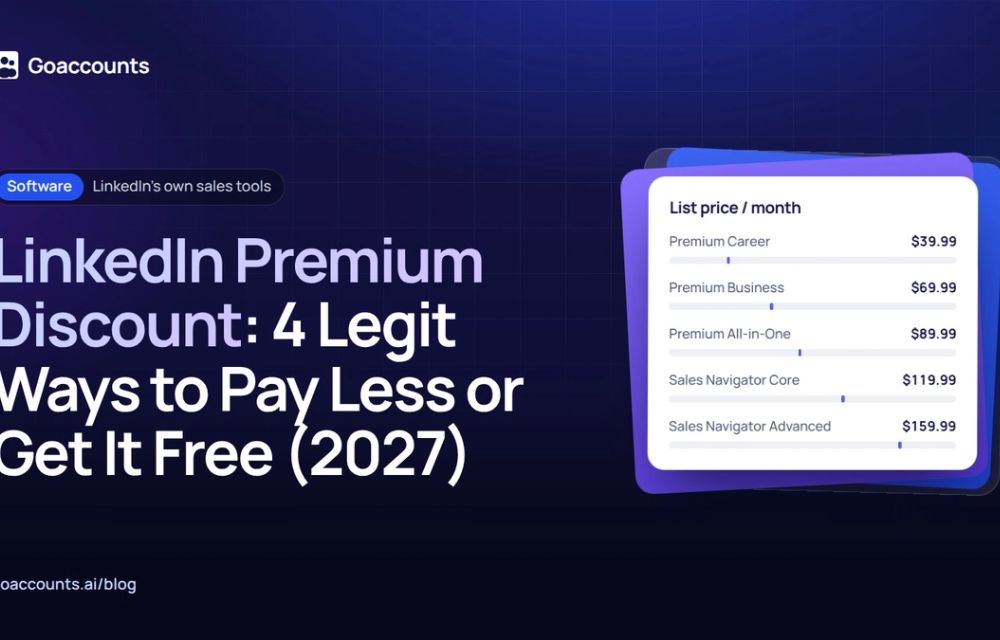
Advanced lists at $159.99 a month per seat against Core's $119.99. That is $40 a seat more each month, or $720 a seat more a year on annual billing.
Scale that to a team. Ten Core seats on annual billing run $10,798.80 a year. Ten Advanced seats run $17,998.80. So the team plan costs about $7,200 a year more for ten seats.
Watch the annual-billing lever, because it is weak on Advanced. LinkedIn's page states a 25% saving for paying annually on Core, but only about 6% on Advanced. On ten Advanced seats, paying yearly saves about $1,200 a year, against $3,600 saved on ten Core seats. So "just pay annually" is strong advice for Core and weak for Advanced.
| Question | Core | Advanced |
|---|---|---|
| List price per seat, monthly | $119.99 | $159.99 |
| List price per seat, annual | $1,079.88 | $1,799.88 |
| Annual saving LinkedIn states | 25% | about 6% |
| Ten seats per year, annual billing | $10,798.80 | $17,998.80 |
Prices vary by country. In the UK, Core lists at £94.99 a month and Advanced at £130.00. LinkedIn says prices are estimates and may exclude tax, and these were checked on its compare-plans page in November 2026. There is a free trial for Core and Advanced, open to members who are not on a paid LinkedIn subscription and have not used a LinkedIn free trial in the past 365 days.
Step 5: Rule out Advanced Plus and Premium
Two tiers people confuse with Advanced.
Advanced Plus is Advanced plus two-way CRM sync. It writes LinkedIn data into your CRM and your CRM data into Sales Navigator, with embedded workflows, admin ROI reporting, and license assignment by CRM role. LinkedIn lists the supported CRMs as HubSpot, Microsoft Dynamics 365, Oracle Sales and Salesforce. It has no public price. LinkedIn shows "request a demo" and says pricing is customized by team size, CRM integration and onboarding needs. Ignore any third-party "per seat per year" figure you see for it. Only move to Advanced Plus when CRM write-back is a hard requirement.
Premium is not the same product. Sales Navigator is LinkedIn's sales-prospecting tool; Premium Business and Premium Career are the general tiers. For contrast, Premium Business lists at $69.99 a month with 15 InMail credits. Sales Navigator Advanced is $159.99 a seat with 50 InMails, the sales-grade filters and the team layer above.
When the real limit is volume, not the plan tier
No Sales Navigator tier raises LinkedIn's weekly limit on connection requests, whether you are on Core, Advanced or Advanced Plus. LinkedIn publishes no fixed weekly number, but the limit exists and applies to every member. Advanced improves how a team targets and collaborates. It does not raise how many people one profile can reach in a week.
As operators who run LinkedIn seats at volume, the ceiling we work to is about 100 to 150 connection requests per account per week . Past that, a pricier plan on the same profile changes nothing, because the cap is on the profile, not the plan. When reach is the bottleneck, more seats raise your total reach and a higher tier does not.
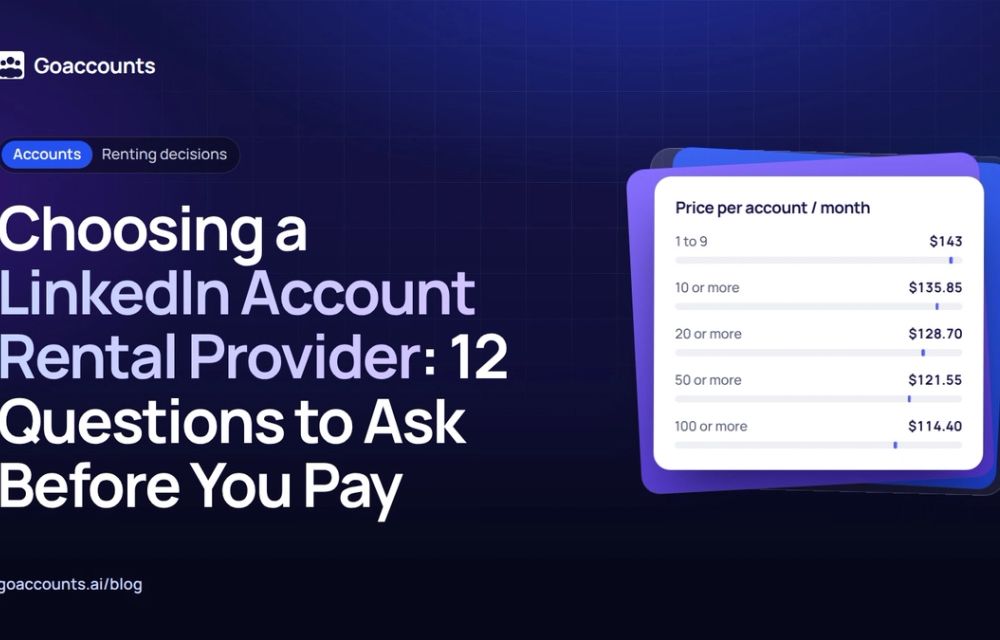
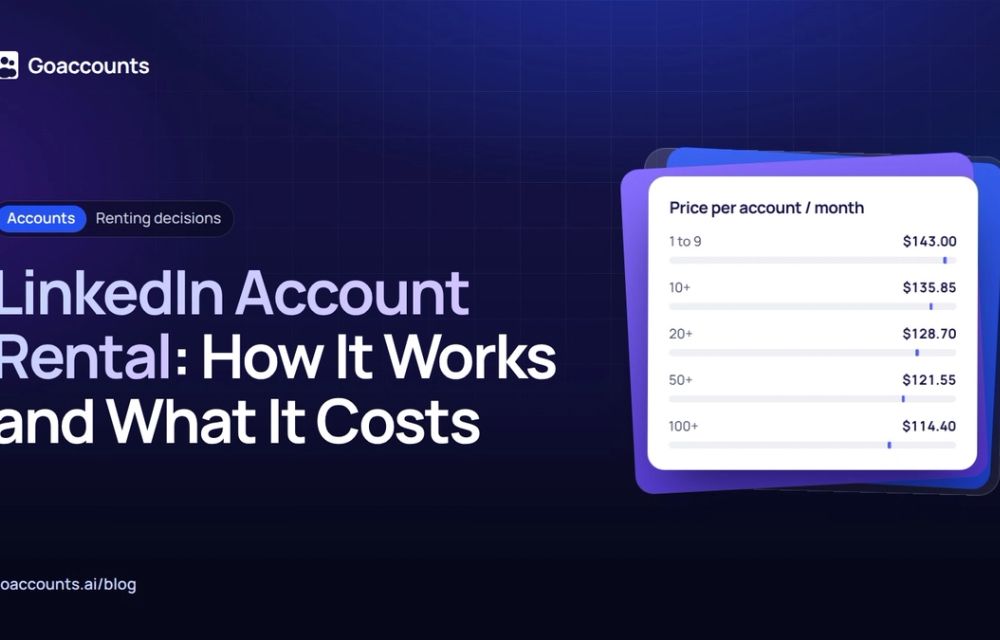
Teams that run real volume add accounts, each with its own profile, proxy and browser profile, rather than overpay for a single seat already at its ceiling. GoAccounts rents LinkedIn accounts from $143 a month, each with a dedicated static ISP proxy and its own browser profile, and you can add Sales Navigator Advanced to a rented account for $40 a month against LinkedIn's $159.99 list. That puts a fully equipped extra seat at about $183 a month. The current numbers are on the GoAccounts pricing page, our guide to scaling outreach across more than one account covers the setup, and real vs fabricated accounts covers which account type fits which job.
Be clear about what this does and does not do. Each rented account carrying the $40 add-on gets its own Advanced capability: the search, the filters, the 50 InMails, the trackable links. It does not recreate LinkedIn's team layer. TeamLink across your whole team, shared lists inside one contract and one central bill are properties of a single multi-seat Advanced subscription, not of separate accounts stacked together. The add-on is the cheaper way to put Advanced capability on more accounts when you are scaling anyway, not a $40 copy of the team plan.
Frequently asked questions
What is the difference between Sales Navigator Core and Advanced? Core is the single-user tier for solo sellers. Advanced is the team tier. It adds a warm-intro network, shared lists and saved searches, book-of-business upload, buyer-intent signals, trackable content links and admin usage reporting. Both carry 50 InMails a month and the same search filters.
How much does Sales Navigator Advanced cost per month? $159.99 a month per seat, or $1,799.88 a year, before tax. That is $40 a seat more than Core. Prices vary by country and were checked on LinkedIn's compare-plans page in November 2026.
Is Sales Navigator Advanced worth it? For a real multi-seat team that shares a book of business and wants warm intros and admin reporting, yes. For a solo seller or a team that shares no network, list or report, the extra $40 a seat usually is not worth it, and Core does the job.
What is TeamLink in Sales Navigator? TeamLink surfaces which of your colleagues already has a first-degree connection to a lead, so someone on your team can offer a warm introduction instead of a cold approach. TeamLink Extend widens that to your company's broader network.
Is Sales Navigator Advanced the same as LinkedIn Premium? No. Sales Navigator is LinkedIn's sales-prospecting product. Premium Career and Premium Business are the general tiers, and they cost less with fewer sales features. Advanced is built for team selling.
Does Sales Navigator Advanced have a free trial? Yes, for Core and Advanced. LinkedIn offers it to members who are not on any paid LinkedIn subscription and have not used a LinkedIn free trial in the past 365 days.
Whichever tier you land on, match it to how your team actually sells. If your constraint is reach rather than features, more seats beat a higher tier, and the GoAccounts academy covers running accounts at volume. If an account has run into trouble rather than just cost, what to do if an account is restricted is the better place to start.
Researched and drafted with AI assistance from our team's notes, and checked against LinkedIn's own compare-plans page and plan-comparison help page on 17 November 2026 by the GoAccounts Team.