LinkedIn Account Restricted for No Reason? Why It Happens and How to Appeal
A LinkedIn account restricted for no reason almost always means an automated flag you were not told about. Here is what really causes it and how to appeal.

Need accounts to run this playbook? Enquire Now
LinkedIn restricts an account when its systems match your activity to one of four policy areas: content, profile, identity, or automated tools. It often gives no specific reason, which is why your LinkedIn account can feel restricted for no reason. To get back in, read the notice, complete any check or stop the tool, then appeal once.
Why is my LinkedIn account restricted for no reason?
"For no reason" is how it feels. Almost nobody is restricted at random. It usually means an automated system matched your activity to one of LinkedIn's broad policy areas, and LinkedIn did not tell you which one.
LinkedIn leans on automated enforcement by design. Its own transparency reporting says automated defenses blocked 97.8% of the fake accounts it stopped, and caught 99.7% of them before anyone reported them. Those figures are about fake accounts and spam, not a detection rate for real accounts, but they show how much of enforcement runs automatically, before a human ever looks. That is why a restriction can arrive with a real cause that is never spelled out.
LinkedIn's restrictions pages name only broad categories. They publish no numbers and no list of exact behaviours, and support may not disclose the specific type or reason. The reason is usually real but undisclosed, not random or unfair. If you want the full recovery walkthrough, see our guide on what to do when your LinkedIn account is restricted.
The experience is documented. In one case, a LinkedIn user told the Delhi High Court his account was restricted with no warning and no specific reason, with only template replies citing the "number and/or severity" of violations, and a temporary restriction that became indefinite. In its 2 November 2026 decision the court dismissed the petition on a technical ground, that LinkedIn does not perform a public function and so could not be challenged that way. It did not rule on whether the restriction was fair, and it pointed the user to a civil suit instead. The case is India-specific, and those are the user's allegations rather than court findings, but it shows the "no reason, template reply" pattern is not imagined.
Temporary vs permanent restrictions
A restriction is either temporary or permanent, and the notice tells you which one you have.
| Temporary restriction | Permanent restriction | |
|---|---|---|
| What happens | A pause on some features or on login until you act, or until a timer LinkedIn set runs out | The account is closed |
| Can it lift? | Yes, once you complete the step LinkedIn asks for, or the timer ends | Not normally; some content violations are permanent after a single strike |
| First move | Read the notice for the type and any re-enable time | Request a review, but set your expectations honestly |
Read the notice before you do anything else. For automated-activity cases it also carries the time your account is re-enabled. That time comes from LinkedIn, not from an estimate.
What actually triggers a restriction
LinkedIn names some causes outright. Other triggers come only from third-party guides and forum users, not from LinkedIn itself.
| What LinkedIn names as a cause | What third-party guides and users report |
|---|---|
| Content violations | Sudden spikes in activity versus your normal pattern |
| Profile violations | Logins from new devices, locations or IP addresses |
| Identity violations | Running one account on several devices at once |
| Automated tools: bots, crawlers, browser plug-ins and extensions are not permitted | High request or message volumes |
| Fake profiles, and using or sharing another person's account | Thin, new or incomplete profiles read as likely bots |
| Renting, selling or transferring account access | Many ignored or spam-marked invitations, or member reports |
The left column is LinkedIn's own, from its restrictions pages, its rules on third-party software, and its User Agreement. LinkedIn does not attach numbers or a behaviour list to any of it. The right column is what other guides and forum users report, not what LinkedIn states. Treat any specific figure you see elsewhere, an invite cap or an appeal success rate, as someone's guess, not a LinkedIn rule.
The best-supported item on the right is third-party automation, because it lines up with LinkedIn's own "automated activity" cause. Take that one seriously first.
How to appeal a restricted LinkedIn account
- If you'd rather not risk your own profile, sign up at GoAccounts and get aged, ID-verified LinkedIn accounts in 3 to 10 days, depending on how many accounts you need.
- Confirm the restriction is real. A genuine restriction shows inside LinkedIn, on the site or app and in the notice. An email that says your account is restricted and links out to a page asking for your ID or password is a known phishing pattern. Check linkedin.com first, and do not click a link in an email.
- Read the notice. It tells you the type of restriction and, for automated-activity cases, the time your account is re-enabled.
- If it is an identity checkpoint, complete the recovery flow through Persona. You upload a valid government ID (a government-issued ID card, driver's license or passport), and LinkedIn may ask for a selfie. Library and school IDs are rejected. In Canada, the EU and the UK you can use a notarized Affidavit of Identity instead.
- If it is automated activity, review and disable the software or browser extension first. LinkedIn says the account is then re-enabled at the time specified on the suspension notice, and you can ask for a "second look" review, which it is rolling out gradually to some members. See LinkedIn's automated activity guidance.
- Request a review and appeal once. Use the contact or request-a-review option on the notice and on LinkedIn's restrictions Help pages. Keep it honest and factual. Do not flood support with repeat tickets, and do not open a second account while you wait, which can make enforcement worse.
How long does a LinkedIn restriction last, and will the appeal work?
LinkedIn publishes no timeframe for how long a restriction lasts or how long a review takes. For automated-activity cases, the account re-enables at the time on the notice. For content cases, LinkedIn says it will review the content again and let you know the outcome, with no set wait.
LinkedIn also publishes no success rate for appeals and makes no reinstatement guarantee. Permanent restrictions exist, and some content violations are permanent after a single strike. If you see a specific figure on another site, a "92% of appeals succeed" or a fixed "24 to 48 hours", treat it as unsourced. LinkedIn does not state it.
Appealing does not fix what triggered it
Getting back in restores your access if LinkedIn accepts your appeal. It does not undo whatever set off the flag.
If an automation tool or a browser extension caused it, you have to stop using it, or the account can be restricted again. LinkedIn's own guidance for automated-activity cases is to review and disable the software, not just wait it out. Verification and enforcement are also separate systems. A verified account can still be restricted, so passing an identity check does not protect an account from a future flag.
If you run outbound at volume: lowering the odds
If you run outreach at volume, a restriction is lost time and lost pipeline. No setup makes an account impossible to restrict, but you can lower the odds that LinkedIn's systems read you as unusual. A clean setup helps: a real, warmed profile with genuine history, activity that stays inside sensible limits, one isolated browser session per account, and its own dedicated IP so the account does not look like it is logging in from everywhere.
In our own setup, each account runs on its own dedicated static ISP proxy and its own isolated browser profile, and we recommend 100 to 150 connection requests per account per week, which is our own guidance, not a LinkedIn limit.
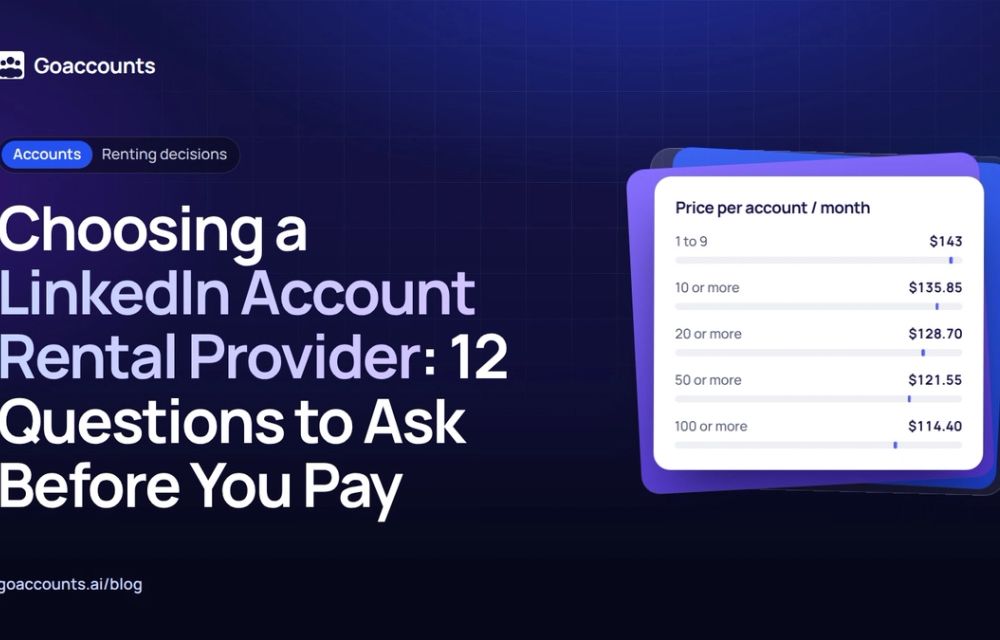
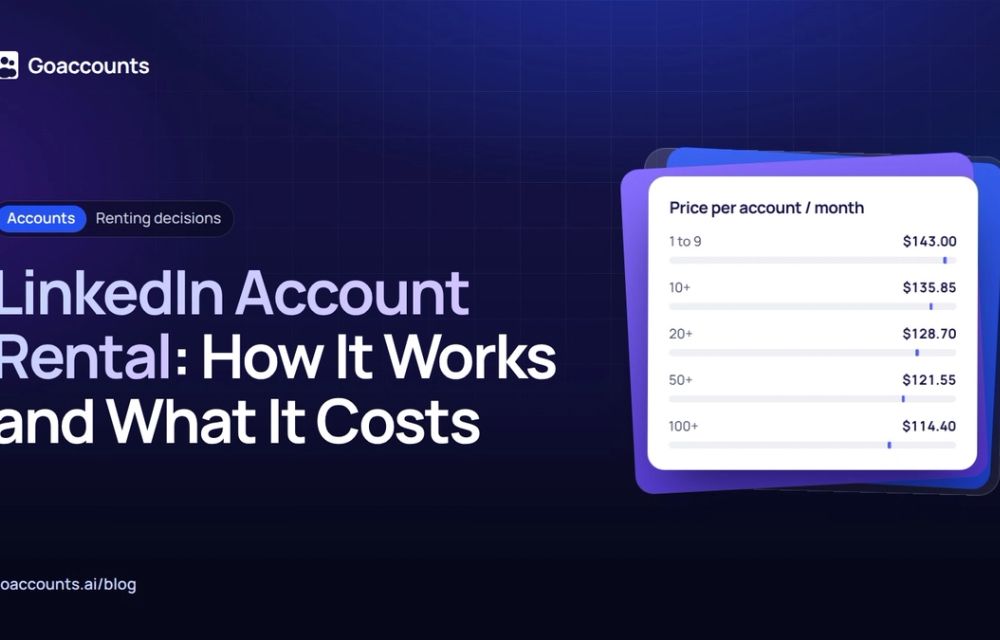
For a team that cannot risk its own profile, renting a real, ID-verified account set up that way is one honest option. If you are weighing it up, read how real and warmed accounts differ and how renting a LinkedIn account works, or watch our Academy walkthrough. GoAccounts rents real, ID-verified LinkedIn accounts, each with its own proxy and browser profile, from $143 a month, with recover-or-replace within 7 days. None of this means LinkedIn permits renting or sharing an account. Its User Agreement does not, so read how you use any account against those terms.
FAQ
Why was my LinkedIn account restricted for no reason? Almost never at random. An automated system matched your activity to one of LinkedIn's broad policy areas, content, profile, identity or automated tools, and did not tell you which. The reason is usually real but undisclosed.
How do I appeal a LinkedIn restriction? Confirm the restriction on linkedin.com, read the notice for the type, complete any identity check or disable the software that triggered it, then request a review through the option on the notice and LinkedIn's restrictions Help pages. Appeal once and keep it factual.
How long does a LinkedIn restriction last? LinkedIn publishes no figure. Automated-activity accounts re-enable at the time on the notice. Content reviews have no stated wait, and some permanent restrictions do not lift.
Can a restricted LinkedIn account be recovered? Often yes, if you complete the steps and LinkedIn accepts your appeal. Permanent restrictions exist, and some content violations are permanent after a single strike.
Will I get restricted again after I appeal? You can be, if a tool or behaviour caused the first restriction and you do not change it. Getting back in does not undo what triggered the flag.
Researched and drafted with AI assistance from our team's notes, and checked against LinkedIn's Help pages and a reported Delhi High Court decision on 16 November 2026 by the GoAccounts Team.