LinkedIn Connection Limit in 2027: How Teams Send More Requests Safely
LinkedIn caps connection requests per account each week, and no plan reliably raises it. Here is what LinkedIn actually says, and how a team sends more in 2027 by adding healthy senders instead of pushing one profile.

Need accounts to run this playbook? Enquire Now
The LinkedIn connection limit is a per-account weekly cap on how many connection requests you can send. LinkedIn publishes no number. Hit it and your account is restricted from sending invitations, usually for about a week. Premium does not reliably raise it. The only safe way a team sends more is to add healthy senders, each staying inside its own weekly rate.
That last point is the whole post. You do not raise one account's ceiling by hammering it. You raise your team's weekly capacity by running more accounts, each kept healthy. There is no bypass, only capacity planning. Below is what LinkedIn's own help pages say, what paying for Premium does and does not do, and how to add senders without getting a profile restricted.
Step 1: Line up the senders you do not have yet
If you'd rather not risk your own profile, sign up at GoAccounts and get aged, ID-verified LinkedIn accounts in 3 to 10 days, depending on how many accounts you need. That is the one lever that actually changes your weekly capacity, so it belongs at the top of the plan.
By the end of this guide you will know what the limit is, when it resets, why Premium will not save you, and how to work out how many senders your weekly volume really needs. First you need an honest number for how many requests a week your team is trying to send.
Step 2: Know what the LinkedIn connection limit actually is
The LinkedIn connection limit is set per account, roughly per week, and LinkedIn does not publish a figure. Its help page says limits exist and that "All LinkedIn members, including those with Basic and Premium accounts, are subject to these limits." It gives no weekly number.
You will see "about 100 requests a week" repeated across blogs. Treat it as a practitioner estimate, not a LinkedIn rule. It is roughly consistent across sources, but LinkedIn has never confirmed it, and enforcement shifts without notice. So plan with ranges and healthy margins, not a hard figure you read somewhere.
The limit counts connection requests (invitations). It is not the same thing as the search limit, which is a separate monthly cap on profile searches and views. More on that at the end.
Step 3: Know when it resets and what happens if you hit it
If you reach the limit, LinkedIn says "your account may be temporarily restricted from sending invitations" and that the restriction "typically lasts one week." You cannot send new invitations until it lifts.
While you are restricted, four things hold. Withdrawing your pending invitations will not remove the restriction. You cannot buy or acquire more invitations to get around it. LinkedIn cannot remove or shorten the wait. And LinkedIn Support will not disclose the type or reason for the restriction.
A restriction can also follow when too many of your invitations are ignored, left pending, or marked as spam. LinkedIn tells you to wait, and its related page points to waiting up to a month before sending another. Separately, once you withdraw an invitation you cannot resend to the same person for up to three weeks, so withdrawing to "reset" is not a tactic.
One more ceiling worth knowing: an account can hold a maximum of 30,000 first-degree connections.
Step 4: Stop expecting Premium or Sales Navigator to raise it
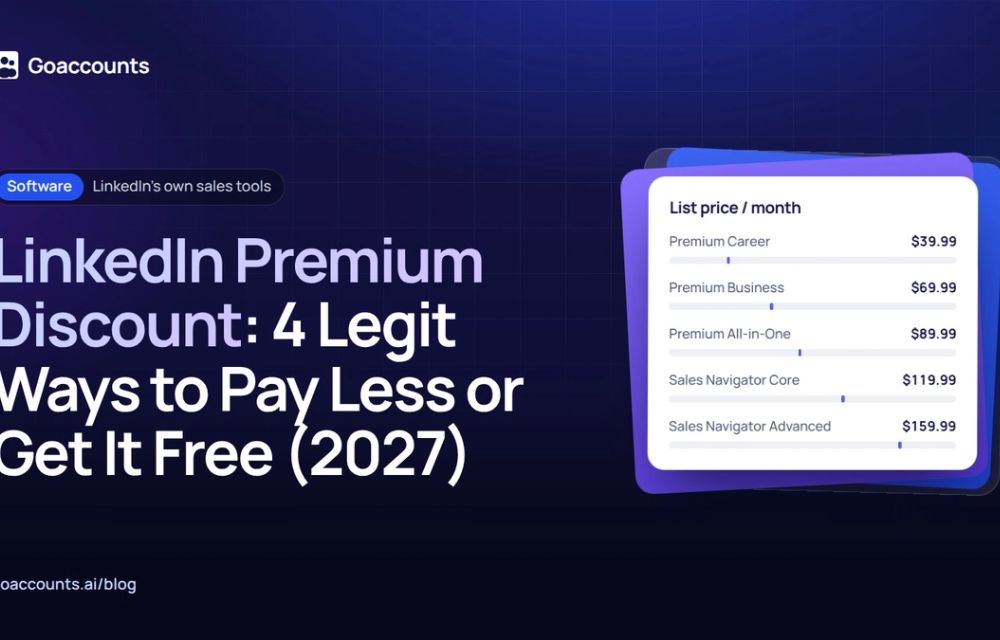
No, paying for Premium or Sales Navigator does not reliably raise the weekly connection-request limit. LinkedIn's note rule says Premium removes the cap on personalized notes, but adds that "connection request limits may still apply." Premium does not hand one account unlimited invitations.
Premium and Sales Navigator sell search, filtering and messaging upgrades: more search, lead filters, InMail credits. Those help you find and message people. They do not lift your weekly invitation ceiling. Some blogs claim Sales Navigator reaches 200 to 250 requests a week. That is uncorroborated and not a LinkedIn figure, so do not build a plan on it.
So the honest answer to "which plan raises my weekly invites" is: none does so reliably. Capacity comes from senders, not from the plan you buy.
Step 5: Add senders instead of pushing one profile
The "bypass" posts skip the math. Your team's weekly capacity is the number of active senders multiplied by the safe requests each sender can send. You change the number of senders, or you keep each sender healthy enough to send near its safe rate. You never change LinkedIn's per-account rule.
Take a worked example. GoAccounts' own recommendation is 100 to 150 connection requests per account per week . So a team that wants to send roughly 500 requests a week runs that across four or five healthy senders at a moderate pace, not one account firing 500. One account firing 500 trips a restriction and tanks acceptance. Four or five senders inside their own rate do not.
The evidence backs this up. In one 180,000-request industry study, acceptance rates sorted by how many invites an account averaged per day looked like this:
| Average invites per day | Acceptance rate |
|---|---|
| Under 10 | 22.77% |
| 10 to 19 | 32.01% (best) |
| 20 to 29 | 26.65% |
| 30 or more | No account reached this |
Acceptance peaked in the moderate band and fell when accounts pushed harder. This is association, not proof, and the under-10 band was a tiny share of the data. But it points the same way as every healthy-sender playbook: moderate pace per account beats maxing one profile.
"Add senders" means more real people with their own accounts, not one person spinning up many profiles. LinkedIn's User Agreement says you "will only have one LinkedIn account, which must be in your real name" and "will not share your account with anyone else." Its Professional Community Policies also say not to use the invitation feature to send promotional messages to people you do not know. So "just make more accounts" is not the answer, and no honest guide will tell you LinkedIn permits sharing or running extra accounts per person.
Step 6: Add senders safely
Once you have the senders, "safely" means keeping acceptance high and each account healthy, not hiding activity. Four habits do most of the work.
Warm up new senders gradually. One outreach vendor's ramp starts around 5 requests a day and builds toward 20 to 30 a day, raising the count a few steps at a time every couple of days. That is one vendor's setting, not a LinkedIn standard, but the shape is right: new accounts should not open at full volume.
Protect acceptance. Target tightly so the people you invite actually want to connect. Personalize where it counts, inside the small allowance LinkedIn gives free accounts. Its help page puts that at three personalized notes a month, up to 200 characters each. Do not send promotional invites to strangers. High acceptance is what keeps a sender out of a restriction in the first place.
Spread the load and rotate. Rather than maxing any one account, move volume across your senders, and pause a struggling account instead of pushing it. Multi-sender tools exist to do exactly this: connect several accounts, rotate sending across them, and pull replies into one inbox.
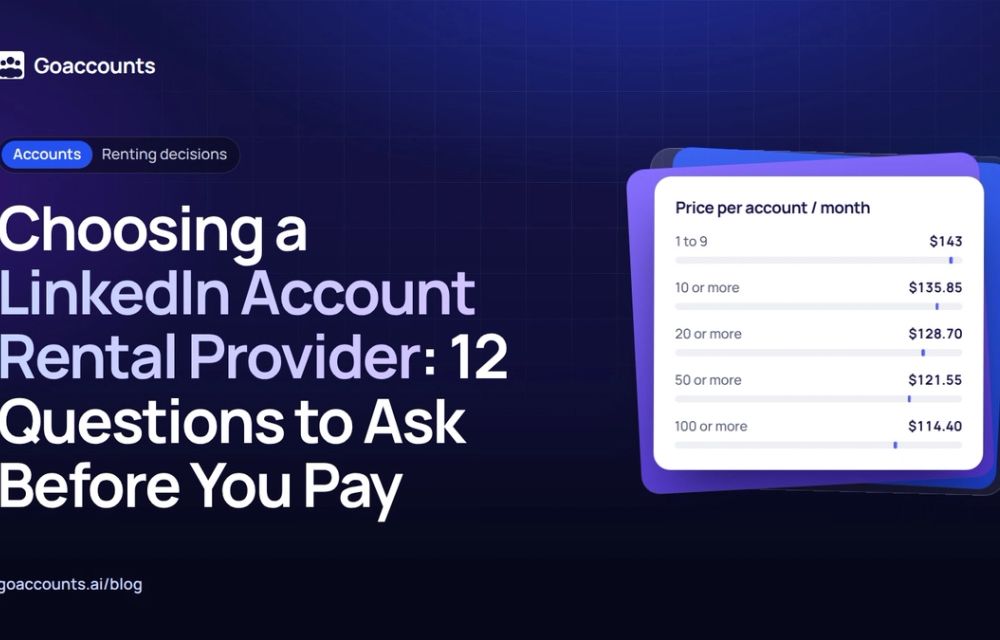
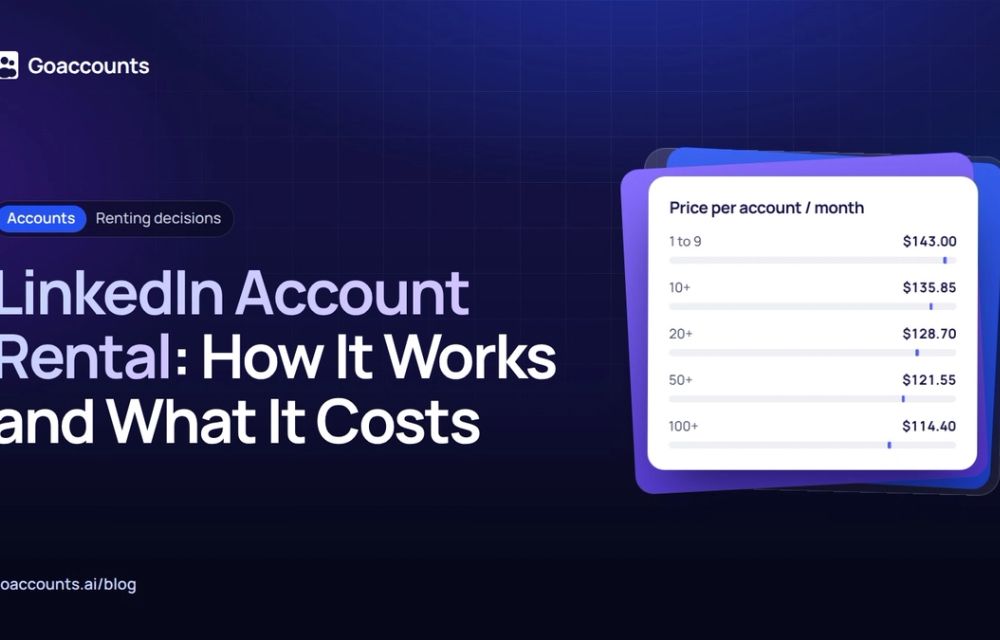
Sometimes you need more senders than you have people. Each real account only carries its own weekly headroom, so a four-person team cannot safely send what ten senders could. Renting additional accounts is one way to add that headroom, and it carries platform risk: LinkedIn does not permit account rental or sharing, so treat rented accounts as outbound senders you keep healthy, not as a loophole. GoAccounts rents LinkedIn accounts from $143 a month. Each is a separate warmed sender with its own dedicated proxy, its own browser profile and 500+ connections, and GoAccounts recovers or replaces an account within 7 days if it is restricted. You can compare pricing and volume discounts or walk through the setup in our video course before you commit. For the wider picture, see scaling outreach across more than one account and choosing which accounts to use.
Step 7: Do not confuse the connection limit with the search limit
These are two different caps. The connection limit covers connection requests and is weekly, which is this whole post. The search limit, sometimes called the commercial-use limit, covers profile searches and views and is monthly. Hitting one does not mean you hit the other, and the fixes differ. If your searches are the thing getting cut off, that is the search limit, not your invitations.
If a sender does get restricted, remember a weekly-invitation restriction is a temporary throttle, not an account ban. For the broader picture, see what to do if an account is restricted.
Common errors and fixes
- Chasing a weekly number. There is no official one. Fix: pace each account to a moderate, steady rate and watch acceptance, not a magic cap.
- Pushing one profile harder to send more. It lowers acceptance and risks a restriction. Fix: add senders and spread the volume.
- Buying Premium to raise the limit. It does not lift the invitation cap. Fix: use Premium for search and messaging if you want it, but plan capacity with senders.
- Blasting strangers with promotional invites. It triggers restrictions and breaks LinkedIn's policies. Fix: target tightly and personalize.
- Withdrawing invites to reset the limit. It does not lift a restriction and blocks resending for up to three weeks. Fix: send fewer, better-targeted invites instead.
When to get help
Get another sender or more support when your weekly target is above what your current profiles can safely carry, when accounts keep getting restricted despite a moderate pace, or when you are scaling faster than you can warm new accounts. If one profile is already at its safe rate and you need more, the next step is more senders, not a harder-worked account.
FAQ
Is there a LinkedIn connection limit? Yes. It is a per-account weekly cap on connection requests, and LinkedIn publishes no number. It applies to Basic and Premium accounts alike.
How many connection requests can I send per week? LinkedIn gives no figure. Practitioners commonly work to roughly 100 a week per account as an estimate, and GoAccounts recommends 100 to 150 per account per week. Neither is a LinkedIn rule.
When does the LinkedIn connection limit reset? If you are restricted, the restriction "typically lasts one week," and you cannot send invitations until it lifts. LinkedIn will not shorten it.
Does LinkedIn Premium increase the connection limit? No, not reliably. Premium removes the personalized-note cap, but LinkedIn says "connection request limits may still apply."
How do I send more connection requests? Add healthy senders. Your weekly capacity is the number of active senders times the safe rate each can send, so more senders at a moderate pace is the only safe way to raise it.
LinkedIn's connection limit is per account, and no plan reliably raises it. If your team needs more weekly capacity than your own profiles can safely carry, the lever is more healthy senders.
Researched and drafted with AI assistance from our team's notes, and checked against LinkedIn's own help and legal pages on 16 November 2026 by the GoAccounts Team.