How to Automate LinkedIn Outreach Safely: Daily Caps and Warm-Up
There is no LinkedIn-approved way to automate outreach. Safe means lower-risk: warm up a new account, cap your daily rate, watch for warnings, and add real senders instead of overloading one profile.

Need accounts to run this playbook? Enquire Now
There is no LinkedIn-approved way to automate your outreach. LinkedIn does not permit third-party automation, so "safely" here means lowering your risk. There is no compliant loophole. Start low, warm up a new account, cap your daily rate, watch for warnings, and add real senders instead of pushing one profile past its limit.
This guide is for agencies, B2B sales teams and recruiters who have hit the ceiling on a single profile and want to run LinkedIn outreach automation without losing an account. Every limit and policy below is quoted from LinkedIn's own pages, checked November 2026, and every daily number is labelled as either our own recommendation or an attributed vendor heuristic.
Is LinkedIn outreach automation allowed?
No. LinkedIn does not permit third-party automation. Its help pages say the company does not allow software that automates activity on the site, and accounts that use it risk being restricted or shut down. Automating outreach sits outside LinkedIn's terms, and the risk stays with whoever owns the account.
In LinkedIn's own words: "We don't permit the use of any third party software, including 'crawlers', bots, browser plug-ins, or browser extensions, that scrape, modify the appearance of, or automate activity on LinkedIn's website" (checked November 2026). Members who use these tools "risk having their accounts restricted or shut down," and the tools themselves "may become non-operational without notice."
Its User Agreement (section 8.2) is just as plain: do not use bots or other automated methods to add contacts or send messages, do not use software to scrape or copy data, and do not bypass usage limits (checked November 2026).
So read "safely" as risk reduction. LinkedIn approves none of it. Nobody can promise an automated account will never be restricted, and any tool that sells itself as guaranteed-safe is overselling.
So what counts as a safe limit? There is no LinkedIn number
LinkedIn publishes no daily or weekly invitation number. Its help page only says limits exist, apply to both Basic and Premium accounts, and that hitting one restricts your sending, typically for about a week. So any "safe limit" you have read is a practitioner estimate. LinkedIn publishes no such rule.
The vendor blogs that rank for this topic all publish hard caps, and they do not agree: 20 to 40 requests a day on one page, 100 to 200 a week on another, 50 to 100 messages a day somewhere else. None of those is a LinkedIn figure, because LinkedIn does not publish one.
What we run, and will stand behind, is 100 to 150 connection requests per account per week. That is our own operating recommendation, not a LinkedIn rule. Spread evenly it works out to roughly 14 to 21 requests a day per account. Treat it as a ceiling to stay under. Do not aim to hit it.
How to automate LinkedIn outreach safely
There is no magic number. Safe automation comes down to three habits: warm up a cold account before you push it, cap your daily rate and hold it, and add real senders when one account is not enough. The steps below put that into practice.
From building and running these accounts, the single most common way a new sender gets restricted is starting at full volume on day one, before the profile has any activity history behind it.
Step 1: Start from a profile you can afford to lose
If you'd rather not risk your own profile, sign up at GoAccounts and get aged, ID-verified LinkedIn accounts in 3 to 10 days, depending on how many accounts you need.
Whatever profile you automate on, remember that automation sits outside LinkedIn's terms, so the risk sits with the account owner. Running outreach on a separate, warmed account keeps your personal profile and its network out of the firing line.
Step 2: Warm up a new or cold account
A new or recently recovered account needs a warm-up before it runs at your normal rate. Starting cold at full volume is the fastest way to get restricted. Ramp the activity up slowly, and keep it varied and human while you do.
One automation tool's warm-up guide suggests starting at about 5 connection requests a day on a fresh account, raising by up to 3 every two days, and building toward 20 to 30 a day. Most vendors describe a ramp of roughly one to three weeks. These are operator heuristics. LinkedIn sets no such numbers.
Personalise where you can, but mind the note limit: on a free account you can add a personalised note to only three connection requests a month, up to 200 characters each. Premium lifts the note count, though request limits can still apply.
Step 3: Set a daily cap and hold it
Pick a steady daily cap and hold it. Raising the cap does not raise your results. One large study of connection requests found that acceptance actually peaks at a moderate daily pace and falls once you push higher, so a calm, consistent rate beats a high one.
That study, drawn from 180,000 requests, found connection-request acceptance was 22.8% for accounts sending under 10 invites a day, 32.0% at 10 to 19 a day, and 26.7% at 20 to 29 a day. No account in it averaged 30 or more. Read it as a correlation rather than a cause, but the pattern holds: pushing one account harder won fewer acceptances.
Watch your own acceptance rate as you go. And remember that a vendor's daily number is only a setting you control. It is not permission to keep sending. If LinkedIn warns you or restricts your sending, stop. Do not push through it.
Step 4: Watch for warnings and know what a restriction looks like
If LinkedIn flags your account for automated activity, it tells you to disable the software that automates it; the account is re-enabled at the time stated on the notice, and no fixed duration is published. An invitation restriction is a separate thing and usually lasts about a week.
For an automated-activity restriction, LinkedIn's guidance is to review and disable the software or extension that automates activity; the account is then re-enabled at the time specified on the suspension notice (checked November 2026). For an invitation restriction, LinkedIn says it typically lasts one week, and while it is on, withdrawing pending invitations will not lift it, you cannot buy more invitations, LinkedIn cannot shorten the wait, and support will not tell you the reason (checked November 2026).
Plan for a restriction instead of assuming it will not happen. Our guide on what to do if an account is restricted walks through the recovery steps.
Step 5: Scale by adding real senders
One account can only safely carry its own weekly rate, so the honest way to send more is to add more real senders, each inside the same low rate. Each sender is a separate real person. LinkedIn's terms are one account per person, in your real name, with no sharing or renting of access.
A few practitioner habits lower the risk on each account: run one automation tool per account, stop a sequence the moment someone replies or declines, and skip bulk requests to strangers you have no reason to contact. On the tools themselves, browser extensions, desktop apps and cloud platforms all fall under LinkedIn's prohibited list, which names plug-ins, extensions and bots wherever they run.
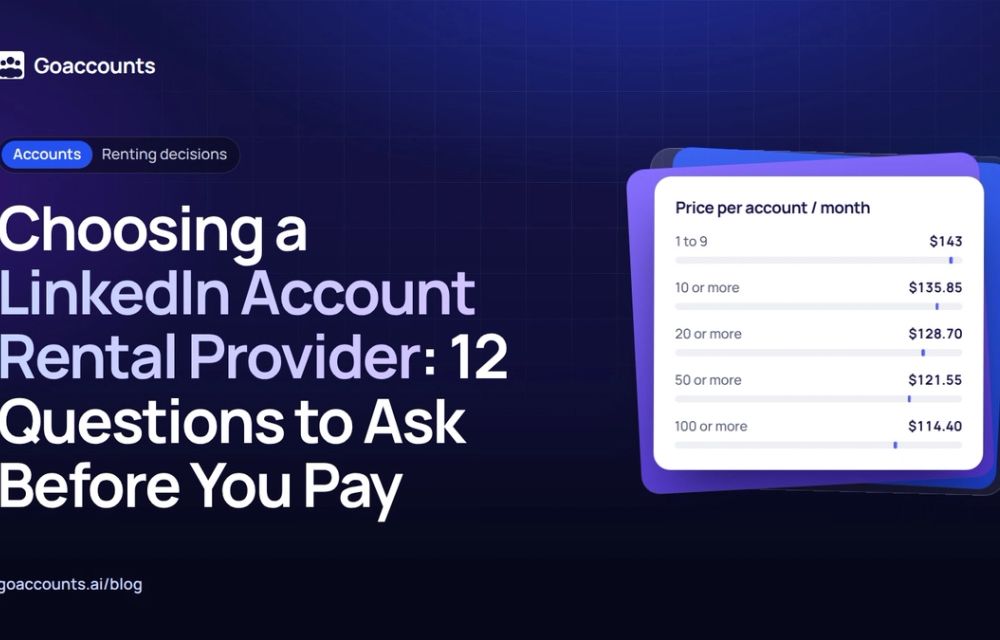
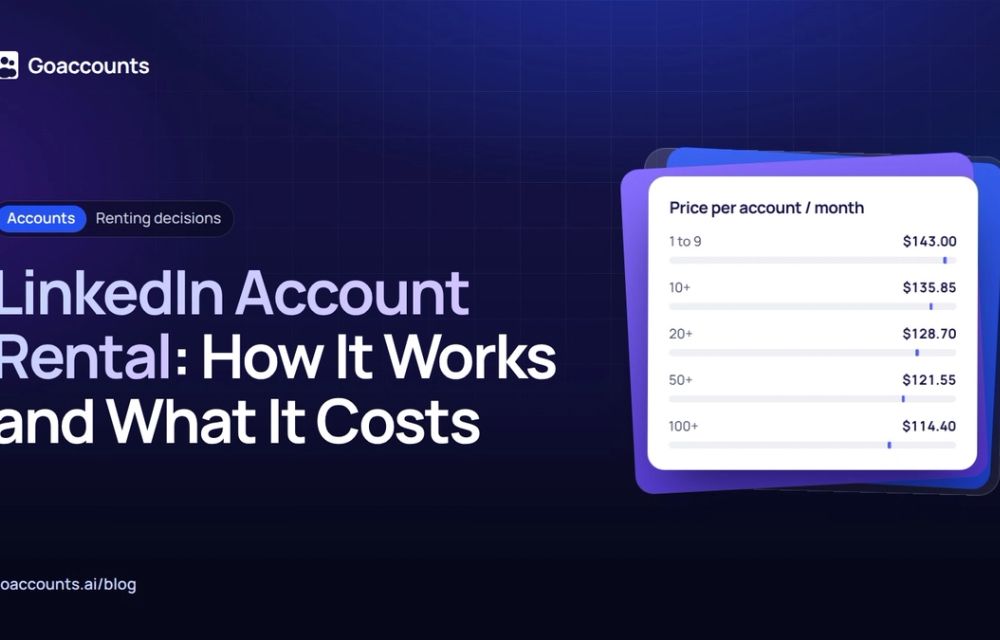
When you need more capacity than your own headcount, you can rent additional warmed accounts, each a separate sender with its own dedicated proxy, its own browser profile and 500+ connections, from $143 per account a month, recovered or replaced within 7 days if one is restricted. Renting carries platform risk, and LinkedIn does not permit account rental or sharing, so treat a rented account the same way as any other: inside a safe rate, warmed, and watched. If you are weighing up which profiles to run, our guides to real vs warmed accounts and to scaling outreach across more than one account go deeper.
Frequently asked questions
Is LinkedIn outreach automation against the rules? Yes. LinkedIn does not permit third-party software that automates activity on the site, and it bars bots or automated methods for adding contacts or sending messages (checked November 2026). You can lower your risk, but you cannot make it approved.
How many connection requests a day is safe? LinkedIn publishes no number. Our own recommendation is 100 to 150 a week per account, which is roughly 14 to 21 a day. Treat it as a ceiling, and start lower on a new account.
How long does a LinkedIn warm-up take? Plan for about one to three weeks, starting at around 5 requests a day and building toward 20 to 30. That ramp is a vendor heuristic, not a LinkedIn standard.
Can I get banned for using automation tools? Yes. LinkedIn says accounts that use automation software risk being restricted or shut down, and the tools themselves can stop working without notice.
What do I do if my account is restricted? For an automated-activity restriction, disable the software and wait; the account re-enables at the time stated on the notice. An invitation restriction usually lasts about a week, and there is no way to speed it up.
Automating LinkedIn outreach is never risk-free, because LinkedIn does not allow it. You control how much risk you carry, and how fast you recover when an account is restricted. For a fuller walkthrough of the setup, see our Academy.
Researched and drafted with AI assistance from our team's notes, and checked against LinkedIn's own help and legal pages on 2026-11-16 by the GoAccounts Team.