25 LinkedIn Recruiter Message Templates Candidates Reply To
The LinkedIn recruiter messages candidates reply to are short and sent one by one. Here are 25 templates, grouped by the moment you're in, each sized to LinkedIn's real 200-character note and InMail limits.

Need accounts to run this playbook? Enquire Now
The LinkedIn recruiter messages candidates reply to are short and sent one by one. LinkedIn's own recruiter data found that InMails under 400 characters got 22% more responses than average, and individually sent ones about 15% more than bulk. A connection note is capped at 200 characters. Below are 25 templates, grouped by the moment you're in.
Most template packs hand you a pile of messages and promise a response rate. This one sizes every message to LinkedIn's real limits and backs the "keep it short" advice with LinkedIn's own recruiter reply data. The honest ceiling is seats and credits, and clever wording can't move it.
You'll need a LinkedIn account that can message or InMail the candidates you're targeting, and a few minutes to swap your own specifics into a template. By the end you'll have 25 messages ready to send, each sized to fit and grouped by where you are in the conversation.
Step 1: Decide between a connection note and an InMail
Start by choosing the channel, because it decides the cost and the length. If you can connect with a candidate, that is, you share a connection, they're within your network's reach, or they have Open Profile turned on, send a connection request with a short note, then message them once they accept. That route is free, and connecting first tends to get more replies than a cold message: one recent outreach benchmark put replies to first-degree connections around 24%, against about 8% for open InMail campaigns. Read those as directional vendor numbers, not a promise.
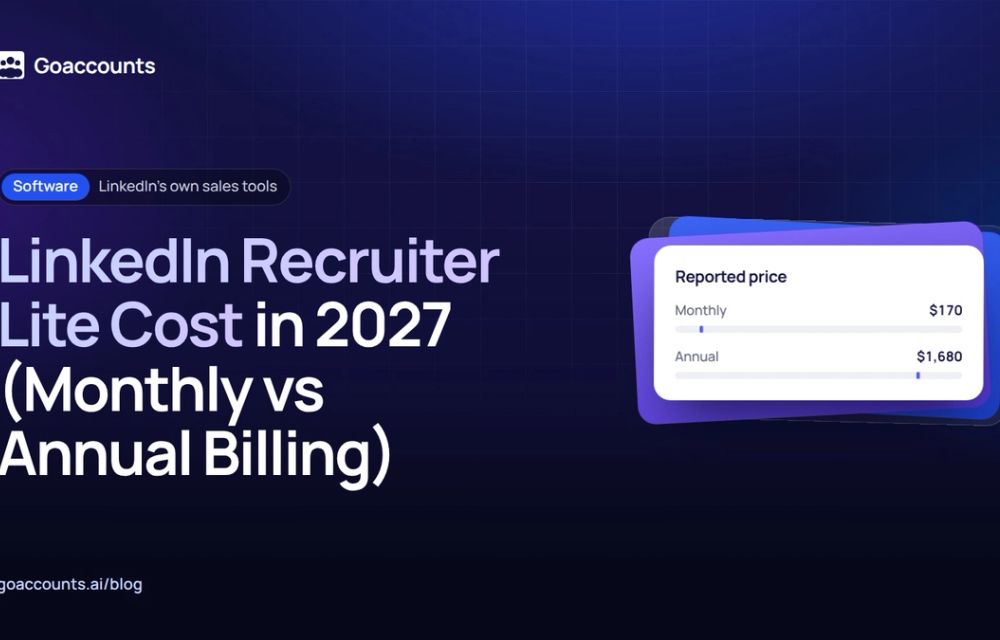
An InMail is for candidates you can't connect with. It costs a credit, and credits are limited by your seat. Recruiter Lite gives 30 InMails per license a month; Recruiter gives 150. A credit comes back if the candidate accepts, declines, or replies within 90 days, but a message left pending does not return it. A free account can only message people you're already connected to, so cold InMail needs a paid seat.
That ceiling is the part most template lists ignore. The best-written message still can't go out if you're out of credits or seats, and a recruiter running real candidate volume hits that wall fast. Running it all from your own profile is its own risk, because heavy sending is exactly what gets a profile restricted. If you'd rather not risk your own profile, sign up at GoAccounts and get aged, ID-verified LinkedIn accounts in 3 to 10 days, depending on how many accounts you need, so your main profile is never the one doing the volume.
Step 2: Keep it short, and send each one yourself
Short wins, and that's LinkedIn's own finding, not ours. LinkedIn analyzed tens of millions of InMails sent by corporate recruiters between May 2021 and April 2022. The shortest messages, under 400 characters, got a response rate 22% above average. The longest, over 1,200 characters, ran 11% below. Individually sent InMails did about 15% better than bulk ones, and 65% of the replies that came landed within 24 hours, 90% within a week.
Two cautions. The data is a few years old, and LinkedIn only publishes relative figures, never an absolute average response rate, so read it as a direction, not a number you'll hit. The direction is clear, and this is recruiter data rather than generic sales data: a short message you wrote for one person beats a long one you blasted to a list.
That's the rule behind every template below. Keep it to a few lines, write it for the one candidate in front of you, and send it yourself rather than scheduling the same block to a hundred people.
Step 3: Size the message to LinkedIn's real limits
Two limits shape every recruiter message, and most guides get the first one wrong.
A connection-request note is capped at 200 characters. That's what LinkedIn's current help page says: each message can be up to 200 characters, spaces included. The 300-character figure that half the template lists still repeat came from an older page and no longer applies. On a free account you can add a personalized note to only three connection requests a month; Premium lifts that to unlimited personalized invitations, though the weekly invitation limit still applies to everyone.
An InMail gives you more room: up to 200 characters in the subject and up to 2,000 in the body. You can use all 2,000, but Step 2 is the reason you shouldn't. Treat the 2,000 as headroom, not a target.
Here are the limits and credits in one place:
| What | The real number |
|---|---|
| Connection-request note | Up to 200 characters, spaces included |
| Personalized notes on a free account | 3 a month |
| InMail subject / body | 200 / 2,000 characters |
| Who a free account can message | Existing connections only |
| InMail credits: Recruiter Lite / Recruiter | 30 / 150 a month |
| InMail credit returned | If accepted, declined, or answered within 90 days |
Checked on LinkedIn's own help pages in November 2026.
Step 4: Pick and personalize one of these 25 templates
Here are 25 recruiter messages, written and length-measured for this post, grouped by the moment you're in. The five connection notes are each under the 200-character limit; the InMails and messages are kept to a few short lines, the way Step 2 says they should be. Swap in your own candidate, company, and role, and re-count any note you change to stay under 200.
Every one names a specific, real reason you picked the candidate, states the role in a line, and makes one low-pressure ask with an easy out. None uses a generic opener.
Cold connection notes (200 characters or fewer)
Use these when you can send a connection request. Specific praise, the role, no pitch.
- "Hi Ava, your React design-system work at Orbit stood out. I'm hiring senior frontend engineers, fully remote. No pressure, just worth connecting."
Why it works: names a specific project, states the role, zero pitch.
- "Hi Ben, saw you lead data engineering at Vertex. I partner with teams hiring in that space. Open to connecting for roles down the line?"
Why it works: future-facing, no apply-now pressure.
- "Hi Chloe, your open-source Go work is impressive. I recruit backend engineers for scale-ups. Keen to stay in touch, even if now isn't the time."
Why it works: gives the candidate an easy out.
- "Hi Noah, you've grown fast in product design at Lattice. I help teams hiring senior PDs. No pitch, just keen to connect."
Why it works: short, specific, low-commitment.
- "Hi Zoe, your ML papers are strong. I'm building a shortlist for a staff ML role. Worth connecting even if the timing is off?"
Why it works: flags a concrete role without demanding a yes.
Cold InMails (short subject, short body)
For candidates you can't connect with. The subject names the role; the body is three short lines.
- Subject: "Senior frontend role, remote, worth a look?" Body: "Hi Ava, your design-system work at Orbit is a strong match for a senior frontend role we're hiring, fully remote. Open to a 15-minute chat this week? No worries if the timing's off."
Why it works: the subject names the role; the body is three short lines.
- Subject: "Data eng lead role at a Series B" Body: "Hi Ben, I'm hiring a data engineering lead and your work at Vertex lines up well. Happy to send the brief first, or grab 15 minutes, whichever's easier."
Why it works: offers the brief before the call, which lowers the ask.
- Subject: "Backend role, your Go work caught my eye" Body: "Hi Chloe, your open-source Go work is exactly the level we need for a backend role at a scale-up. Would a short call be useful, or should I send details first?"
Why it works: specific, one ask, easy out.
- Subject: "Staff ML role, building a shortlist" Body: "Hi Zoe, your ML papers stood out as I shortlist for a staff ML role. Interested enough to hear the details? A yes or no is plenty for now."
Why it works: invites a one-word reply, which comes fast.
- Subject: "Head of data, Series B, quiet conversation?" Body: "Hi Dev, you built the data team at Monzo from scratch, which is rare. We're hiring a head of data. Open to a confidential chat? No pressure, no rush."
Why it works: acknowledges a passive candidate's need for discretion.
First messages after they accept
Send this a day or two after they accept your request. Lead with why you're relevant, then one ask.
- "Hi Ava, thanks for connecting. Quick version: we're hiring a senior frontend engineer, remote, and your design-system work is a strong fit. Worth 15 minutes to see if it's interesting? I can send the brief first."
Why it works: leads with relevance, one low-pressure ask.
- "Hi Ben, appreciate the connect. The reason I reached out: a data engineering lead role that matches your Vertex work. Want the details, or a short call? Either's fine."
Why it works: gives two easy options.
- "Hi Noah, thanks for accepting. We're hiring a senior product designer and your Lattice work lines up well. Happy to share the role, want me to send it over?"
Why it works: asks permission before pitching.
- "Hi Zoe, good to connect. I'm shortlisting for a staff ML role and your research is a strong match. Would a quick overview be useful? No obligation at all."
Why it works: keeps the door open.
- "Hi Dev, thanks for connecting. Keeping it brief: a head-of-data role at a Series B where your Monzo experience would matter. Open to a confidential chat this week?"
Why it works: respects discretion, specific ask.
Follow-ups when there's no reply
One short, polite nudge. Add one new detail and give them an easy out. Never send more than one.
- "Hi Ava, no worries if now isn't the right time. If it helps, the role is remote, ships weekly, and the team is small. Want the full brief, or should I check back in a few months?"
Why it works: adds detail and offers to step back.
- "Hi Ben, following up once. The data-eng lead role is still open and your background fits. A one-line reply is plenty: interested, not now, or never, and I'll respect whichever."
Why it works: makes replying effortless.
- "Hi Chloe, circling back with one more detail: the backend team is fully remote and owns its roadmap. Still happy to send the brief if that's useful, or I'll leave it here."
Why it works: new fact, clean exit.
- "Hi Zoe, last nudge from me. If the staff ML role isn't a fit, no problem at all. If you'd like, I can keep you in mind for the next one instead."
Why it works: closes gracefully, keeps the relationship.
- "Hi Noah, I know inboxes get busy. If the senior PD role is interesting, even a quick 'send details' works. If not, I'll stop here and wish you well."
Why it works: empathetic, one tiny ask.
Re-engage, refer, or schedule
For warm relationships: a past candidate, a referral, or booking the call.
- Re-engage a past candidate: "Hi Sam, you were close for our platform role last year and the team still speaks highly of your work. A similar role just opened. Worth revisiting?"
Why it works: specific history, flattering, low-pressure.
- Ask for a referral: "Hi Dana, thanks again for your time earlier. If this role isn't right for you, is there someone in your network you'd point me to? No pressure either way."
Why it works: asks only after a real interaction.
- Schedule the call: "Hi Ava, glad you're interested. Are you free Tuesday or Wednesday afternoon for 20 minutes? I'll keep it focused: the role, the team, and what happens next."
Why it works: two concrete options, sets expectations.
- Reach an open candidate: "Hi Priya, saw you're open to new roles. We're hiring a role that lines up with your work at Northwind. Want the details? Happy to keep it low-key while you look."
Why it works: uses a public signal respectfully.
- Keep a warm candidate for later: "Hi Mara, totally understand the timing isn't right. Mind if I check back in a quarter? I'll send one short note then, nothing in between."
Why it works: sets a light, consented cadence.
Why aren't candidates replying to your LinkedIn recruiter messages?
Usually it's the numbers, not your wording, so set honest expectations first. Across large outreach datasets, even recruiting-friendly acceptance sits around a third of requests, and single-digit percentages of people reply to a first message. Those figures come from outreach vendors measuring their own sends, they vary widely, and none is a rate LinkedIn promises or that you should expect. What you control is how specific and how short the message is, not the reply rate.
Then there are the fixable causes. The biggest is the generic opener. Lines like "I came across your profile" and "I hope this message finds you well" tell a senior candidate you sent the same thing to fifty people, and they're among the top reasons a message gets skipped. Bulk-sending is the next one, and LinkedIn's own data already told you individually sent beats bulk. A message that buries the role under three sentences of preamble loses the reader before the ask.
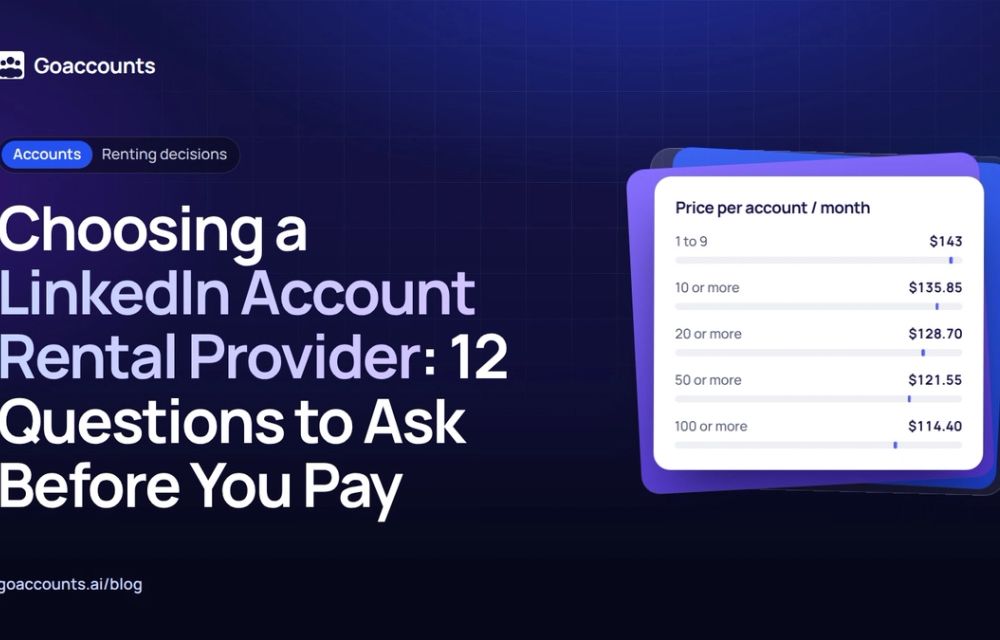
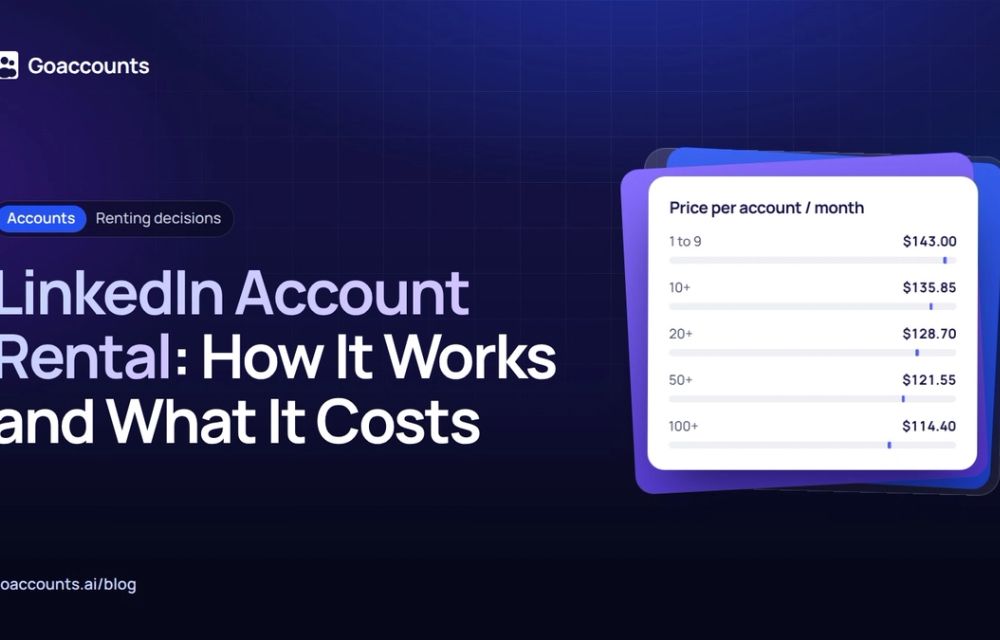
There's one cause no rewrite fixes: running out of seats and credits. A free account can't InMail a candidate you're not connected to, and one paid seat gives you a fixed number of credits a month. If your bottleneck is that one profile or one seat can't send enough to matter, that's a seats question, not a wording one. GoAccounts rents aged, ID-verified LinkedIn accounts from $143 a month, each with its own dedicated proxy and GoLogin browser profile, and offers a Recruiter Lite add-on for $98 a month per account, so a team can run candidate outreach at volume across more seats. If you want the full workflow, our guide to running outreach across more than one account and the academy walkthrough cover it, and if an account ever gets limited, here's what to do when you hit the invite limit.
FAQ
How long should a recruiter InMail be? Short. In LinkedIn's own recruiter data, messages under 400 characters replied best, and anything over 1,200 did worst. A few short lines beats a full pitch.
Connection request or InMail? Connect first where you can, then message after they accept; it's free and tends to get more replies. Use InMail for candidates you can't connect with, knowing it costs a credit.
How many InMails does Recruiter Lite give? 30 a month per license. Recruiter gives 150. A credit comes back if the candidate accepts, declines, or replies within 90 days.
What's a good recruiter response rate? LinkedIn publishes no average, and vendor benchmarks swing from single digits to much higher depending on audience and method. Treat any promised rate with suspicion and focus on sending short, specific messages.
Why do candidates ignore recruiters? Generic openers, bulk-sending, and messages that hide the role. Fix those and, if you still can't send enough, see real vs fabricated accounts for which account type fits volume outreach.
Researched and drafted with AI assistance from our team's notes, and checked against LinkedIn's own help pages and published recruiter reply data on November 16, 2026 by the GoAccounts Team.