How to Write a LinkedIn Cold Message That Gets a Reply (2027)
A LinkedIn cold message that gets a reply fits the platform's real limits. The connection note holds only 200 characters in 2027, so here is a structure sized to that, backed by LinkedIn's own reply data.

Need accounts to run this playbook? Enquire Now
A LinkedIn cold message gets a reply when it fits LinkedIn's real limits. A connection-request note holds only 200 characters, not the 300 most guides still quote, so say one specific, relevant thing and make one soft ask. Skip the pitch and the link. Then connect first and message after someone accepts. That replies about three times better than a cold InMail.
Below is the whole structure, sized to the limits, with LinkedIn's own numbers behind each rule.
How long can a LinkedIn cold message be? (200 characters, not 300)
Short. A LinkedIn connection-request note is capped at 200 characters on LinkedIn's current Help page, not the 300 that older guides still repeat. An InMail allows a 200-character subject and a 2,000-character body, but LinkedIn's own data says keep the body far shorter. Size the message to the limit before you write a word.
| What you're sending | Limit | Notes |
|---|---|---|
| Connection-request note | 200 characters | Not 300. The whole note has to fit. |
| Personalized notes, free account | 3 per month | A free plan lets you add a note to only three requests a month. |
| InMail subject | 200 characters | Keep it short enough to read in a glance. |
| InMail body | 2,000 characters | Allowed, but keep it far shorter (see Step 4). |
| Monthly InMail credits | 5 to 50 by plan | Premium Career 5, Premium Business 15, Premium All-in-One 30, Sales Navigator Core 50, Recruiter Lite 30. |
| Weekly invitation limit | No published number | Applies to everyone; over-sending can restrict you for about a week. |
Limits checked on LinkedIn's own Help pages, November 16, 2026.
Connect first, or send an InMail?
Default to connecting first. In one recent outreach benchmark drawn from thousands of campaigns, messages to people you were already connected to replied about 24% of the time, against about 8% for an Open InMail to someone you weren't. That is a vendor benchmark, not a LinkedIn number, and reply rates move around, but the direction is consistent: a message to a connection beats a cold InMail by a wide margin.
So the default play is simple. Send a connection request with a note. Once they accept, send your first real message. Use InMail only when you can't connect, because a free account can message existing connections only, and InMail to a stranger needs a paid plan. The one free exception is a member with Open Profile turned on, who you can message without spending a credit.
Step 1: Decide whose profile is on the line
What you'll have at the end: a repeatable structure for the note, the first message, the InMail fallback and the follow-up, each sized to a real limit. What you need first: a LinkedIn account you're willing to send from, and one specific, true reason you're reaching out to this person.
Start by deciding whose account takes the wear. Sending cold messages at volume puts strain on the profile you send from. If you'd rather not risk your own profile, sign up at GoAccounts and get aged, ID-verified LinkedIn accounts in 3 to 10 days, depending on how many accounts you need. Either way, the structure below is the same.
Step 2: Open with a soft, specific hook, not a pitch
Your first line decides whether the rest gets read. Lead with one concrete, true thing about them: a post they wrote, a change at their company, a group you share. Then make a soft opener. You are asking for a conversation, not pushing for a meeting.
Illustrative example: "Hi Sarah, your post on cutting SDR ramp to 30 days was sharp. We're working the same problem on a smaller team." That earns attention because it is about them and it is specific. A line like "I help sales teams book more meetings" does not, because it is about you and it fits a thousand other senders.
Step 3: Fit the note in 200 characters
The note's only job is to earn the accept, so cut everything else: the company intro, the link, the calendar invite. Here is the test. This note won't send, because it runs well past 200 characters before it even reaches the ask:
"Hi Sarah, I came across your profile and was really impressed by your background and your work at Acme. I run a service that helps sales teams like yours book more meetings with less effort, and I'd love to show you on a quick call this week. Here's my link:"
This one does the job inside the limit:
"Hi Sarah, your post on cutting SDR ramp to 30 days was sharp. We're fixing the same thing on a smaller team. Open to comparing notes?"
Same person, same intent, a fraction of the words. If you're on a free account, remember you only get three personalized notes a month, so spend them on people worth the words.
Step 4: Keep the first message under 400 characters
Once they accept, keep the first real message short. This is not a style preference. LinkedIn's own recruiter data, measured May 2021 to April 2022, found messages under 400 characters got about 22% more responses than average, while messages over 1,200 characters ran about 11% below. Individually written messages beat bulk sends by roughly 15%.
So lead with relevance, make one specific ask, and give an easy out.
Illustrative example: "Thanks for connecting, Sarah. You mentioned ramp time in your post, so this might be useful. We keep a short, no-fluff breakdown of what's worked for teams your size. Want me to send it over? No call, just the doc." That stays under 400 characters, it earns the reply by offering something, and the ask is easy to say yes to.
Step 5: Send an InMail only when you can't connect
InMail is the fallback for people you can't connect with, not your opening move. Keep the subject under its 200-character cap and short enough to read in a glance, and keep the body short even though LinkedIn allows 2,000 characters. The same rule holds: individually written beats bulk.
InMail credits are limited, from 5 a month on Premium Career up to 50 on Sales Navigator Core, so spend them on people worth it. A credit comes back if the person accepts, declines or replies within 90 days, so a relevant message that gets answered costs you nothing.
Illustrative example. Subject: "Quick question on your SDR ramp". Body: "Hi Sarah, you wrote about ramp time recently, so this may be useful. We keep a one-page breakdown of what's worked for teams your size. Can I send it over? No call needed."
Step 6: Follow up without being pushy
Most replies that come, come later, so one good follow-up is worth sending. Wait about three to five days after they accept, then follow up once with a new angle, not a "just bumping this". If that goes quiet, a second note a week or two later is fine. Stop after two or three.
Each follow-up should add something: a relevant example, a short resource, a different question. If you have nothing new to say, don't send. Reply rates look to be getting harder year over year. Relevance earns the reply, not volume.
Why aren't my LinkedIn cold messages working?
Often the message is fine and the math is the problem. Across large recent outreach studies, connection requests get accepted somewhere between about 18% and 29% of the time, and only a fraction of those turn into replies. One large benchmark of millions of requests put acceptance near 28% and replies once messaging around 10%. An agency study of thousands of records put acceptance near 19% and replies from connected people near 18%. The numbers conflict because they are vendor-reported, but they agree on the shape: most cold messages do not get a reply, and reply rates look to be sliding year over year. So a tight structure and a good list matter more than a clever template.
Then there is the hard ceiling. A free account can personalize only three connection requests a month. No plan lifts the weekly invitation limit, which applies to everyone, and over-sending can restrict your account for about a week. In practice, one profile tops out around 100 to 150 connection requests a week , which is the working ceiling we hold accounts to at GoAccounts. So once your message works, the bottleneck shifts to how many accounts you can send from.
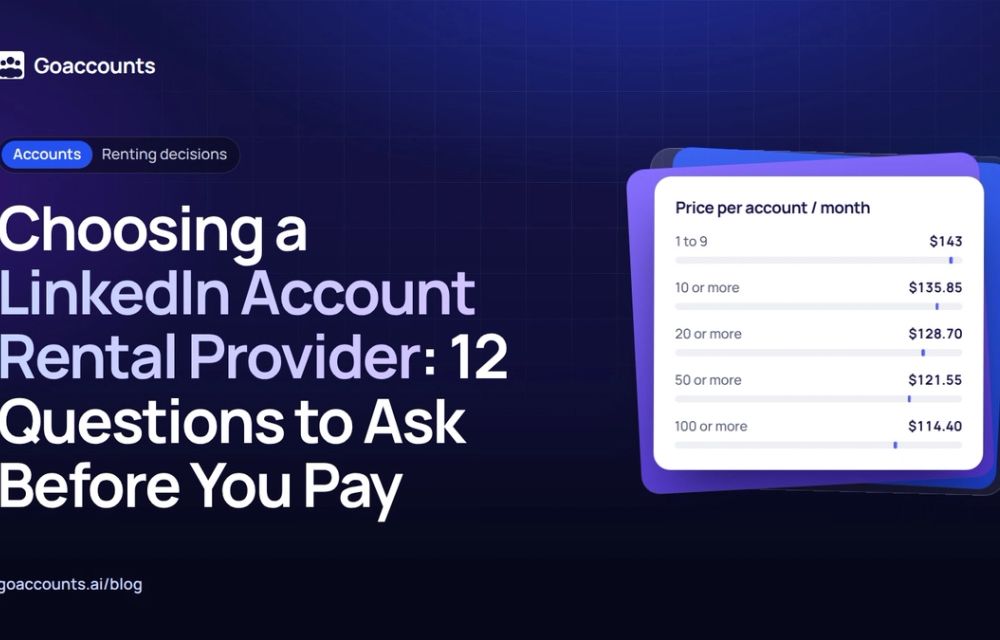
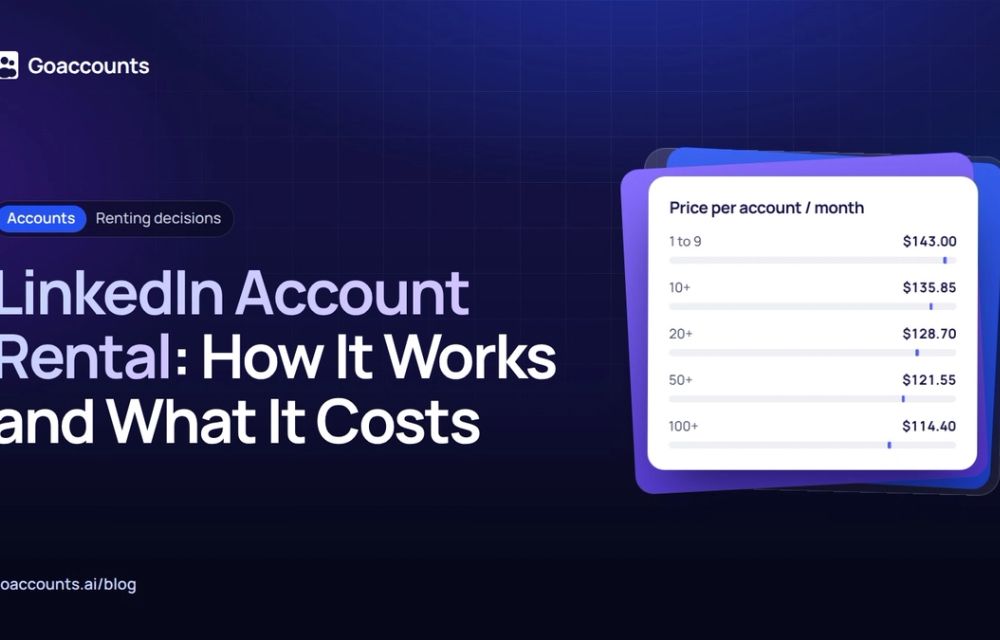
Once one profile hits that weekly limit, the only way to send more is to run more accounts. GoAccounts rents aged, ID-verified LinkedIn accounts from $143 a month, each with its own ISP proxy, its own GoLogin browser profile and 500+ real connections, month to month. If you're running outbound at volume, that is the lever, and if you run outreach for clients you can resell them under your own brand. You can see the plans on the pricing page.
Common mistakes that cost you replies
- Writing a note for 300 characters. It won't send. Size it to 200.
- Opening with what you do. Open with something true about them.
- Putting a link or a calendar in the connection note. Save it for after they reply.
- Leading with InMail. Connect first; it replies far better.
- Sending the same message in bulk. Individually written wins. Write for one person.
- Following up with "just bumping this". Add a new angle or don't send.
FAQ
How long can a LinkedIn connection note be? 200 characters. LinkedIn's current Help page caps the note at 200, not the 300 many older guides still quote.
Should I add a note to a connection request? Yes, a specific note lifts your accept rate. On a free account you only get three personalized notes a month, so use them where they count.
Connect first or send an InMail? Connect first. Messages to existing connections reply far better than cold InMail in outreach benchmarks, roughly three times as often. Keep InMail for people you can't connect with.
How long should the first message be? Under about 400 characters. LinkedIn's own data shows messages under 400 characters get more responses than average, and short, individually written ones beat long or bulk sends.
How many cold messages can I send a day? LinkedIn publishes no daily number, but it limits invitations weekly and can restrict accounts that over-send for about a week. In practice one profile runs to roughly 100 to 150 requests a week.
Send messages people actually answer
A cold message that gets a reply is a specific, honest note that fits 200 characters, a short first message once they accept, and a follow-up that adds something. Size it to LinkedIn's real limits, connect before you InMail, and keep it short. LinkedIn's own data rewards short messages. When one profile's weekly ceiling is the limit, that is where more accounts come in. The GoAccounts academy walks through the outbound setup end to end.
Researched and drafted with AI assistance from our team's notes, and checked against LinkedIn's own Help pages and published reply data on November 16, 2026 by the GoAccounts Team.