23 Best LinkedIn Automation Tools in 2027 (Price and Safety Compared)
A dated price for 23 of the 25 tools, checked on each vendor's own page (two gate their pricing), plus the one thing the listicles skip: what 'safe' actually means against LinkedIn's own rules.

Need accounts to run this playbook? Enquire Now
LinkedIn automation tools send connection requests, follow-ups and messages for you so one person can run outreach at a volume no one could do by hand. The best pick depends on scale: cloud multi-sender tools suit agencies running many accounts, while a browser extension or desktop app suits a solo user at low volume. Every price below was checked on the vendor's own pricing page on November 16, 2026 (Reply.io last re-checked November 11, 2026; its page blocks automated checks), for 23 of the 25 tools; two gate their pricing, so we flag that instead of guessing. LinkedIn permits none of these tools, so the account you run them on matters more than the tool you pick.
Last verified: November 16, 2026 (prices) and November 5, 2026 (LinkedIn's own rules and limits).
What is a LinkedIn automation tool?
A LinkedIn automation tool is software that performs LinkedIn actions on your behalf: visiting profiles, sending connection requests, and following up with messages on a schedule you set. Most run from the cloud on the vendor's servers, some run as a Chrome extension inside your own browser, and a few run as a desktop app on your computer. The multi-account ones let you add several LinkedIn accounts, called senders, to one workspace and rotate sending across them.
Are LinkedIn automation tools safe or allowed?
No. LinkedIn's Help page states plainly that "we don't permit the use of any third party software, including 'crawlers', bots, browser plug-ins, or browser extensions," that accounts can be restricted or shut down, and that such tools may stop working without notice. LinkedIn's User Agreement (section 8.2) bans using bots or other unauthorised automated methods to access the service, add contacts or send messages. So every tool on this page breaches LinkedIn's terms and carries real account risk.
That is why "safe" in this post means lower-risk, never risk-free. No automation tool is undetectable, and none is approved by LinkedIn. A good tool gives you control over how hard it pushes: daily caps, a slow warm-up, human-like delays, and the choice of where it runs. Those settings lower the odds of a restriction. They do not remove it. If an account is flagged for automated activity, LinkedIn's own guidance is to disable the software and wait; the account is re-enabled at the time shown on the notice, and no durations are published.
Cloud vs Chrome extension vs desktop: which is lower risk?
Where a tool runs changes your exposure. This is the one safety choice that is genuinely yours. The common industry view, echoed in several vendor articles, is that browser extensions carry higher restriction risk for high-volume use than cloud tools. An extension acts inside your live logged-in session, while a cloud tool runs server-side with its own dedicated IP per account. Treat that as widely reported, not as a LinkedIn ruling. Cloud is not safe either. It is LinkedIn-risky too.
| Where it runs | Who holds the session and IP | Reported restriction exposure |
|---|---|---|
| Cloud (server-side) | The vendor runs it; usually a dedicated IP per account | Lower for high volume, per the common view; still against the rules |
| Chrome extension | Your own browser and your own IP; acts as you, live | Higher for high volume, per the common view |
| Desktop app | Your own computer and IP; runs only when your machine is on | Between the two; hands-on, one account at a time |
Examples: cloud tools include HeyReach, SalesRobot and Dripify; Octopus CRM runs as a Chrome extension; Linked Helper and the local version of Dux-Soup run as desktop apps.
What "safe settings" actually means (daily caps, warm-up, rotation)
Vendors advertise "safe limits" and warm-up as features, but LinkedIn publishes no daily or weekly number. LinkedIn says invitation limits exist and apply to every member, Basic and Premium, but it does not state a figure. If you exceed its unstated limit, sending can be restricted, and LinkedIn says the restriction "typically lasts one week." The 100-per-week and 20-to-30-per-day numbers you see quoted are community practice and vendor claims, not LinkedIn's rules. These are the real levers.
- Daily caps. A cap is a limit you set on requests, messages and profile views per day. It is a sensible guess at staying under LinkedIn's unstated line, not a number LinkedIn blesses. SalesRobot and LinkedFusion publish full numeric caps per plan; most others let you set your own.
- Warm-up. You raise volume slowly on a new account instead of starting at full speed. For example, one tool's help doc ramps from 5 requests a day toward a goal of 20 to 30 a day, raising the cap by up to 3 every 2 days. That is one vendor's setting, not a standard.
- Rotation. Across many senders, rotation pauses an account that is struggling and swaps in a fresh one from your pool, so no single account carries all the load.
- What LinkedIn does publish. LinkedIn's Help pages give different figures (one says up to 3 personalised notes a month for Basic members, another says 5); Premium members get unlimited personalised invitations, and a note can run up to 200 characters. The hard ceiling is 30,000 first-degree connections.
One study of acceptance by daily volume (one vendor's dataset, association only) found accounts averaging under 10 invites a day saw 22.77% acceptance, 10 to 19 saw 32.01%, and 20 to 29 saw 26.65%. Read it as a reason to keep volume modest, not as a law.
How we ranked these 23
We ranked these 23 LinkedIn automation tools for one job: running outreach, often across more than one account, without getting those accounts restricted any faster than you have to. Fit for that job comes first. Can the tool run several senders from one place and rotate across them, does it let you set activity limits and warm up a new account slowly, and does it run in the cloud with a dedicated IP per account rather than as an extension tied to your own live session? Price comes second. We show the real entry price from each tool's own pricing page, checked on November 16, 2026, with the billing period stated and promos stripped out. Evidence comes third: how long the tool has operated and how consistent its own documentation is.
We will not tell you any of this is safe. LinkedIn permits no third-party automation at all, so the honest comparison is which tool gives you the most control over how hard it pushes, not which one LinkedIn allows. We do not sell an automation tool and we are not in this list, so nothing here is ranked by who pays us. There are no affiliate links in this post.
The 23 best LinkedIn automation tools in 2027
Entry prices are the vendor's own, read on their pricing page on November 16, 2026. Where billing was monthly or annual, the period is stated. All 23 rows carry a checked price. Two more well-known tools, Salesflow and PhantomBuster, gate their pricing behind contact forms or scripts, so we could not assign a verified number and left them out of the ranking; we note them below.
| # | Tool | Entry price · billing | Deployment | Runs many accounts | Safety settings it exposes (vendor's wording) | Link |
|---|---|---|---|---|---|---|
| 1 | HeyReach | $79/sender/mo (monthly); $64 yearly | Cloud | Yes; $79/sender for 1 to 9 senders, or a flat $2,999/mo Unlimited plan | "each sender stays within their daily limits and safe usage levels"; bring your own proxies | heyreach.io (https://www.heyreach.io/pricing) |
| 2 | Expandi | $99/mo (monthly); $79/mo annual | Cloud | Seats equal LinkedIn accounts | Profile Auto Warm-up; Smart limits (daily caps); dedicated country IP | expandi.io (https://expandi.io/pricing/) |
| 3 | SalesRobot | $59/account/mo (monthly); $39 annual | Cloud | Yes, priced per account | Full numeric daily caps per plan; human-like behaviour; smart delays; local IP rotation | salesrobot.co (https://www.salesrobot.co/pricing) |
| 4 | Dripify | $79/user/mo (monthly); $59 annual | Cloud | One account per seat; team plans | Daily caps; randomised human-like timing | dripify.com (https://dripify.com/pricing/) |
| 5 | We-Connect | $49/seat/mo (billed annually) | Cloud | Per seat; agency dashboard at 10+ | Daily action limits; randomised timing; dedicated country IP; auto-withdraw | we-connect.io (https://we-connect.io/pricing) |
| 6 | Closely | $65/mo (monthly, 1 account); $39 annual | Cloud | 1, 3 or 5 accounts | Safety limits; warm-up mode; dedicated residential IP | closelyhq.com (https://closelyhq.com/pricing) |
| 7 | Meet Alfred | $39/seat/mo (annual); $59 monthly | Cloud | One seat per account; agency switching | Randomised human-like delays; daily limits by account type; Human Behavior Simulation | meetalfred.com (https://meetalfred.com/pricing) |
| 8 | Botdog | $79/account/mo (monthly); $55.33 annual | Cloud | Per account; Team Campaigns | Analytics and account health (vendor's wording) | botdog.co (https://www.botdog.co/pricing) |
| 9 | LinkedFusion | $65.95/user/mo (monthly) | Cloud | Per user; Team and Sync | Per-tier daily caps; dedicated IP | linkedfusion.io (https://www.linkedfusion.io/pricing/) |
| 10 | Skylead | $100/seat/mo | Cloud | One seat plus unlimited email | "LinkedIn warm-up" label only, no numbers shown | skylead.io (https://www.skylead.io/pricing) |
| 11 | Waalaxy | €19/user/mo Pro (period toggle) | Cloud | Multiple sender accounts | Monthly caps (300 to 800 invites) | waalaxy.com (https://www.waalaxy.com/pricing) |
| 12 | GetSales | $69/mo (1 account); agency packs | Cloud | One account to agency scale | Gradual warm-up ramp; managed ISP proxy included | getsales.io (https://getsales.io/pricing/) |
| 13 | La Growth Machine | €60/identity/mo (monthly); €50 annual | Cloud / multichannel | 3 to unlimited identities | Dedicated mobile proxy per identity; no daily caps shown | lagrowthmachine.com (https://lagrowthmachine.com/pricing/) |
| 14 | lemlist | $87/user/mo Multichannel (yearly) | Cloud / multichannel | 5 senders per user | LinkedIn-side: none shown; email warm-up only | lemlist.com (https://www.lemlist.com/pricing) |
| 15 | Salesforge | $40/mo Pro (monthly); $80 unlimited | Cloud / multichannel | Pro 1 sender; Growth unlimited | LinkedIn-side: 1 sender + 300 Social Action Credits/mo on Pro; no warm-up/caps named | salesforge.ai (https://www.salesforge.ai/pricing) |
| 16 | Reply.io | $69/mo per account add-on (last confirmed Nov 11, 2026) | Cloud / multichannel | Per-account add-on | Activity limits (per our earlier read; page blocks automated re-checks) | reply.io (https://reply.io/pricing/) |
| 17 | Valley | $199/seat/mo (monthly); $149 quarterly | Cloud / AI-SDR | Per seat | None shown; you set the sending schedule and approve drafts | joinvalley.co (https://www.joinvalley.co/pricing) |
| 18 | Kakiyo | €125/mo Pioneer (1 account) | Cloud / AI-SDR | 1, 3, 5 or 10+ accounts | "Advanced LinkedIn Account Protection" only, no detail | kakiyo.com (https://kakiyo.com/pricing) |
| 19 | Gojiberry AI | $99/mo PRO (monthly) | Cloud / AI-SDR | More senders on Custom | None shown; full-auto or approve before it sends | gojiberry.ai (https://gojiberry.ai/#pricing) |
| 20 | Octopus CRM | $9.99/mo Starter (monthly); $6.99 annual | Chrome extension | One licence per account | Activity Control with excessive-activity alerts; markets itself "Safest" (its claim, not a fact) | octopuscrm.io (https://octopuscrm.io/#pricing) |
| 21 | Linked Helper | $15/licence/mo; from $8.25 on 12 months | Desktop app | Per licence; Multi-Account Manager | Rolling-24h smart limits; human behaviour simulation; auto-visit warm-up; working hours | linkedhelper.com (https://www.linkedhelper.com/pricing) |
| 22 | Dux-Soup | $55/seat/mo STACKED Local; $99 Cloud | Desktop / Cloud | 2+ seats; shared campaigns | Customizable time delays between actions | dux-soup.com (https://www.dux-soup.com/pricing) |
| 23 | Zeekeo | $149/seat Launchpad (DIY); DFY from $600/mo | Cloud / managed | Not stated per plan | None shown on the self-serve tier | zeekeo.com (https://zeekeo.com/pricing) |
Best for agencies running many accounts. HeyReach, Botdog, Skylead, We-Connect and GetSales are built around multiple senders in one workspace. HeyReach bills $79 per sender for 1 to 9 senders, with a separate Unlimited plan at a flat $2,999 a month, and says each sender stays within its own daily limits. Botdog shows analytics and an account-health view per account. GetSales includes a managed ISP proxy per session and a warm-up ramp you can turn off. These are the tools that fit a client book, not a single user.
Best for a solo user at low volume, and the cheapest. Linked Helper (from $8.25 a month on a 12-month term) and Octopus CRM ($9.99 a month) are the value picks. Linked Helper runs as a desktop app with the deepest controls on this list: rolling 24-hour smart limits, human behaviour simulation and an auto-visit warm-up. The trade-off is that it is hands-on and runs only while your computer is on. Octopus CRM is a Chrome extension, so it acts inside your own session, which is the higher-exposure deployment at volume. Dux-Soup sits here too, with a desktop and a cloud option.
Best for published, numeric safety settings. If you want firm numbers rather than vague "smart limits," SalesRobot and LinkedFusion publish full daily caps per plan. Expandi, Dripify, We-Connect, Closely and Meet Alfred describe warm-up and smart limits clearly, though without firm caps on every page. None of these numbers is LinkedIn's rule; they are the vendor's own settings.
Best for multichannel (LinkedIn plus email). La Growth Machine, lemlist, Salesforge and Reply.io run LinkedIn alongside email in one sequence. Their warm-up and sending-limit features are usually email-side; the LinkedIn side often shows no safety setting at all, so lean on your own caps. Waalaxy also fits here, with monthly rather than daily invite limits.
Best for hands-off AI outreach. Valley, Kakiyo and Gojiberry AI write and send with an AI agent and ask you to approve drafts. They show little or no LinkedIn-side safety setting on their pricing pages, so you are trusting the schedule you set. Zeekeo's self-serve Launchpad tier belongs here; we do not vouch for its done-for-you tier, which does not state who owns the LinkedIn accounts.
Two we could not price. Salesflow and PhantomBuster are real, well-known tools, but neither posts a machine-readable price (checked November 16, 2026). We left them out of the ranked 23 rather than quote a number we could not verify, and we would check their live pricing pages before buying.
Five more worth knowing
These are adjacent tools, not outreach automation, but they come up in the same searches. Taplio ($39 a month) and Supergrow ($39 a month) are content and personal-branding tools, not senders. Evaboot ($9 a month) exports Sales Navigator lists and finds emails but does not send outreach. Unipile (from €49 a month) is a developer API, not an end-user app. A fifth, Sendpilot, was offline when we checked, so we left it out until it returns.
How much do LinkedIn automation tools cost?
Pure automation software runs from about $10 to $200 per seat or account per month. The floor is Octopus CRM at $9.99 and Linked Helper from $8.25 on an annual term; the ceiling on this list is Valley at $199 a seat. Most mainstream cloud tools land between $39 and $99 a month per account, with an annual discount of roughly 20% to 40% if you commit. Free ongoing plans are rare; what you usually get is a 7 to 14 day trial, often without a card.
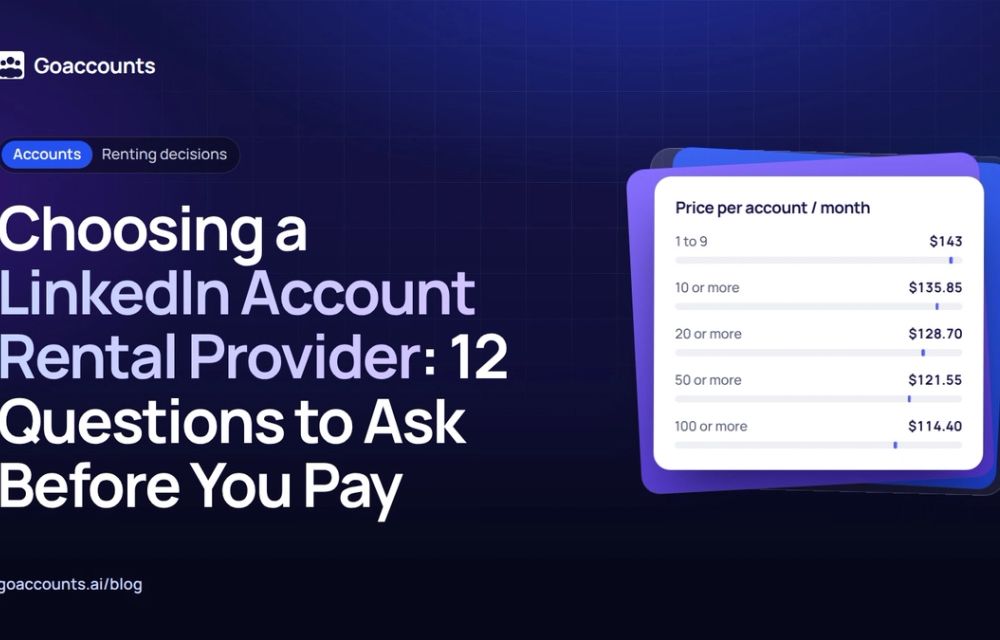
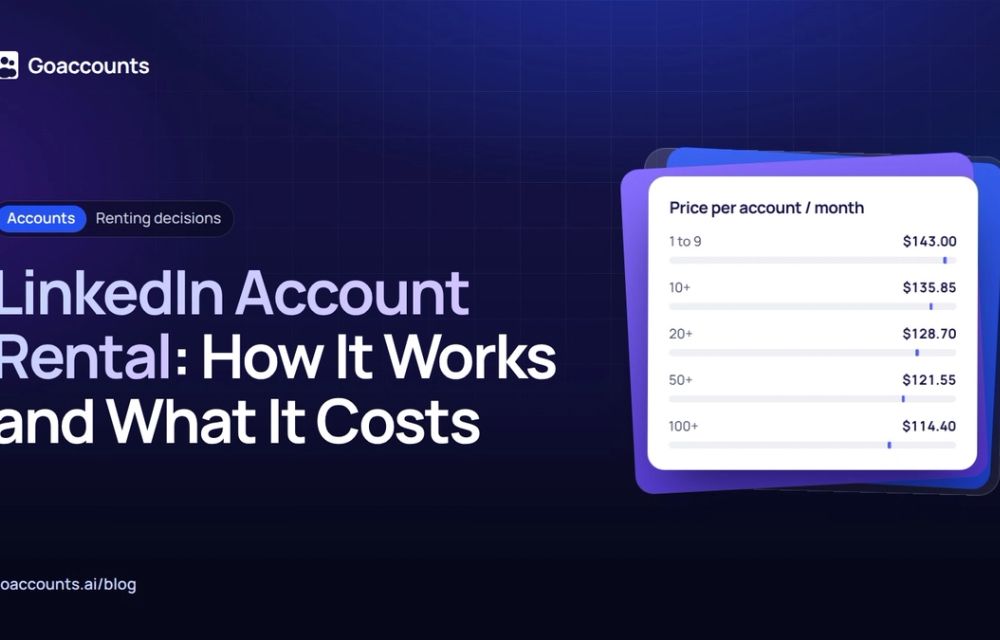
By comparison, renting a ready-made LinkedIn account from a provider typically adds about $45 to $210 per profile per month on top of whatever software you run, based on the rental providers we track as of November 11, 2026. You are paying for the account and its setup, not just the tool. That is a separate line item from the software price. Separate it when you budget.
Do you need a proxy or a separate account to run these?
Running outreach at volume means running it on accounts, and often more than one. Cloud tools usually handle the network side for you: GetSales includes a managed ISP proxy, and We-Connect, Closely and LinkedFusion give each account a dedicated IP. A Chrome extension uses your own IP, so there is nothing to add, but it is tied to your own session. The bigger question is the account itself. If you want to run several senders, you need several real LinkedIn accounts, each ideally on its own IP and its own anti-detect browser profile so they do not look like one person. Our companion lists cover the other two legs of that stack: the best LinkedIn proxy providers and the best anti-detect browsers. If you are new to all of this, our Academy walkthrough covers the setup.
Frequently asked questions
Are there free LinkedIn automation tools? Not many with a real free tier. Most offer a 7 to 14 day trial, often without a card. The cheapest paid options are Octopus CRM at $9.99 a month and Linked Helper from $8.25 a month on a 12-month term, both suited to a solo user at low volume.
Can LinkedIn detect automation tools? Yes. LinkedIn states it does not permit any third-party software and that it restricts or shuts down accounts for automated activity. No tool is undetectable, whatever a vendor claims. Lower-risk settings reduce the odds of a restriction; they do not remove it.
Can one tool run multiple LinkedIn accounts? Yes. Cloud multi-sender tools such as HeyReach, Botdog, Skylead and We-Connect are built to add several accounts, called senders, to one workspace and rotate sending across them. That is the setup agencies use to run a client book.
What are safe daily limits on LinkedIn? LinkedIn publishes no daily or weekly number. It says limits exist and that exceeding them can restrict your sending, usually for about a week. The 100-per-week and 20-to-30-per-day figures you see quoted are community practice, not LinkedIn's rule. Keep volume modest and warm new accounts up slowly.
Cloud or Chrome extension, which is lower risk? The common view is that a cloud tool, running server-side on its own IP, carries lower restriction risk at high volume than an extension that acts inside your live session. Neither is risk-free, and this is a reported pattern, not a LinkedIn statement.
Which is best for lead generation and agencies? For many accounts, a cloud multi-sender tool (HeyReach, Botdog, Skylead, We-Connect, GetSales) fits best. For a single user at low volume, Linked Helper or Octopus CRM does the job for the least money.
LinkedIn automation software still needs a LinkedIn account to run on, and LinkedIn permits none of these tools, so the account you run them on is where the real risk sits. We rent accounts for a living. The tool reviews skip the part that matters most: your account's safety comes from the account, not the software. The safest setup is an account you are willing to lose, warmed slowly, on its own IP. If you would rather not risk your own profile, every GoAccounts account is aged, ID-verified, warmed, and ships with a dedicated static ISP proxy and an anti-detect browser profile, and it works with any automation tool on this list. New accounts arrive in 3 to 10 days, depending on how many accounts you need.
Researched and drafted with AI assistance from our team's notes, and checked against each tool's own pricing page on November 16, 2026 and LinkedIn's Help and User Agreement on November 5, 2026, by the GoAccounts Team.
Changelog
- November 16, 2026: First published. All 23 ranked prices re-checked on each vendor's pricing page on November 16, 2026, except Reply.io (last confirmed November 11, 2026; its page blocks automated checks); two tools that gate pricing (Salesflow, PhantomBuster) are noted but not ranked; LinkedIn's rules and limits checked against LinkedIn's Help and User Agreement on November 5, 2026.