Why Is LinkedIn Asking for My ID? What Triggers It and How to Get Past It
LinkedIn shows the ID prompt when it flags your account. Here is what actually triggers it, the exact steps to clear it through Persona, and why verifying alone won't stop it happening again.

Need accounts to run this playbook? Enquire Now
If LinkedIn is asking for your ID, it has flagged your account and needs to confirm you are a real person before it restores normal use. The check runs through its partner Persona, or CLEAR or DigiLocker depending on your country. The common causes are automated-tool use and activity that looks unusual. Submit a valid government ID to recover access.
Why is LinkedIn asking for my ID?
Two different things make LinkedIn ask for your ID.
The first is an involuntary checkpoint. LinkedIn has flagged the account and blocks normal use until you confirm who you are. This usually runs through Persona as part of account recovery. If you searched "why is LinkedIn asking for my ID", this is almost always what you are dealing with, and it is what the rest of this guide covers.
The second is the optional verification badge. LinkedIn invites you to verify your identity to earn a verified mark next to your name. That one is voluntary and free, and you can decline it. If you are being invited rather than blocked, you are looking at the badge, not a restriction.
Verification is free either way, at no additional cost. From here on, we mean the checkpoint: why it appears, and how to clear it.
What actually triggers the ID prompt?
This is where most guides go wrong. LinkedIn names broad causes. It does not publish a list of exact behaviours, numbers or thresholds. Anything more specific than LinkedIn's own wording is third-party guesswork, and we label it that way.
What LinkedIn says. Its account-restrictions page lists four kinds of violation behind a restriction: content, profile, identity, and automated tools. Restrictions can be temporary or permanent, and some content violations can be permanent after a single breach. For automated activity, LinkedIn's guidance tells you to review and disable the software or extension. It gives no numbers and no durations.
What third parties report. Tool-vendor recovery guides and user forums fill the gap with specifics LinkedIn never states: sudden spikes in activity, logins from new devices or locations, running one account on several devices, request volumes above recommended limits, a thin profile read as a likely bot, or a mismatch between your profile and the ID you present. The automation point lines up with LinkedIn's own "automated activity" cause, so it is the best supported. Treat the rest as unconfirmed reports. LinkedIn confirms none of the numbers.
| What LinkedIn names as a cause | What third parties report (not confirmed by LinkedIn) |
|---|---|
| Content violations | Sudden spikes in activity |
| Profile violations | Logins from new devices or locations |
| Identity violations | One account on several devices |
| Automated-tool use | Request volume above recommended limits |
| No numbers or durations published | Thin profile, or a profile and ID mismatch |
Why does LinkedIn push identity checks at all? Its own Community Report for July to December 2025 says automated defences blocked 97.8% of the fake accounts it stopped, and 99.7% of those before any member reported them. That figure is about fake accounts, not a detection rate for real accounts that are rented or automated. Read it as the reason the checks exist, not as a number that applies to you.
How to clear it: step by step
Work through these in order.
- If you were running automation, stop it first. If a prohibited tool or extension triggered the flag, verifying your ID will not keep the account open. LinkedIn tells you to review and disable the software. Skip this and the restriction can come straight back. Our guide on what to do if your account is restricted covers the recovery side in more detail.
- Open the prompt only on linkedin.com. A genuine check appears on LinkedIn and runs through its partners. Be wary of any unexpected email or off-platform link that demands your ID.
- Upload a valid, unexpired government ID. Persona accepts a digital ID or a clear photo of a government ID card, driver's license, or passport. Accepted documents vary by country. Library and school ID cards are not accepted.
- Take the selfie if asked. In some cases Persona asks for a photo of your face to check it matches the ID portrait. It is not always required.
- Make sure the name and country match your profile. A mismatch is one of the common reasons a check fails, so fix an out-of-date name before you start.
- In Canada, the EU and the UK, use the Affidavit of Identity if you would rather not submit ID. LinkedIn lets you print an Affidavit of Identity, sign it before a Notary Public, and attach the notarized form to your support case.
- If it keeps failing, use the troubleshooting path. LinkedIn links to "other ways to recover your account" and ID verification troubleshooting tips, and you can ask for a "second look" review, though LinkedIn says that review is being rolled out gradually and reaches only some members. If it still won't verify, LinkedIn's troubleshooting page lets you request assistance from LinkedIn directly.
How long does it take, and is it safe?
How long. LinkedIn publishes no timeframe. For an automated-activity restriction, the account is re-enabled at the time stated on your suspension notification. The general restrictions page gives no duration for a review either. Ignore any "24 to 48 hours" or "one week" figure you see on other sites; LinkedIn does not state one.
Is it safe. The check runs through LinkedIn's named partners: Persona, CLEAR, or DigiLocker depending on your country and flow. For the voluntary verification badge, LinkedIn says it does not receive your biometric data, ID photos, document numbers, or expiry and issue dates. The one safety rule that matters: only ever verify on linkedin.com, never through an email or link you did not expect.
Verifying doesn't fix what triggered it
Most guides skip this point, and it catches people out.
Completing the ID check confirms who you are. It does not undo whatever triggered the flag. If automated activity set it off, you have to stop the tool as well, or the account can be restricted again. Forums are full of people who verify, get blocked a second time, and do not understand why.
Verification and enforcement are two separate systems. One confirms identity. The other restricts accounts for behaviour. A verified account can still be restricted. No account is immune, whatever a seller promises you.
If you run outbound at volume: lowering the odds
If you run outbound for a living, an ID checkpoint is downtime and risk. You cannot stop LinkedIn from ever asking, but you can lower the odds that your activity looks unusual in the first place.
The basics are the same for everyone: keep volume realistic, give each account its own isolated browser session and its own dedicated IP, and work from a warmed, real profile rather than a thin new one. As a guideline, GoAccounts recommends 100 to 150 connection requests per account per week. That is our own recommendation, not a LinkedIn number.
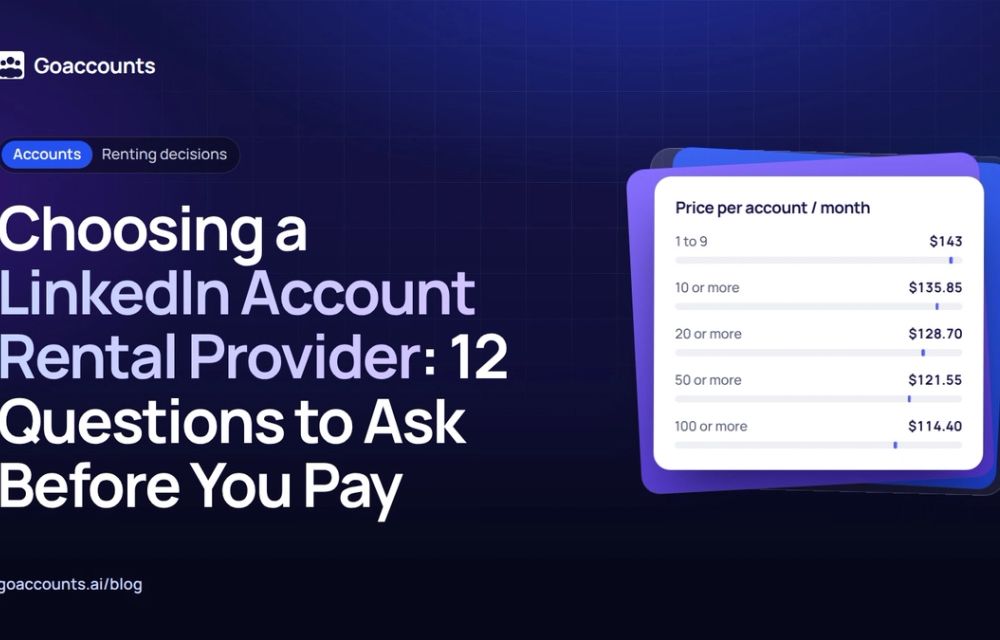
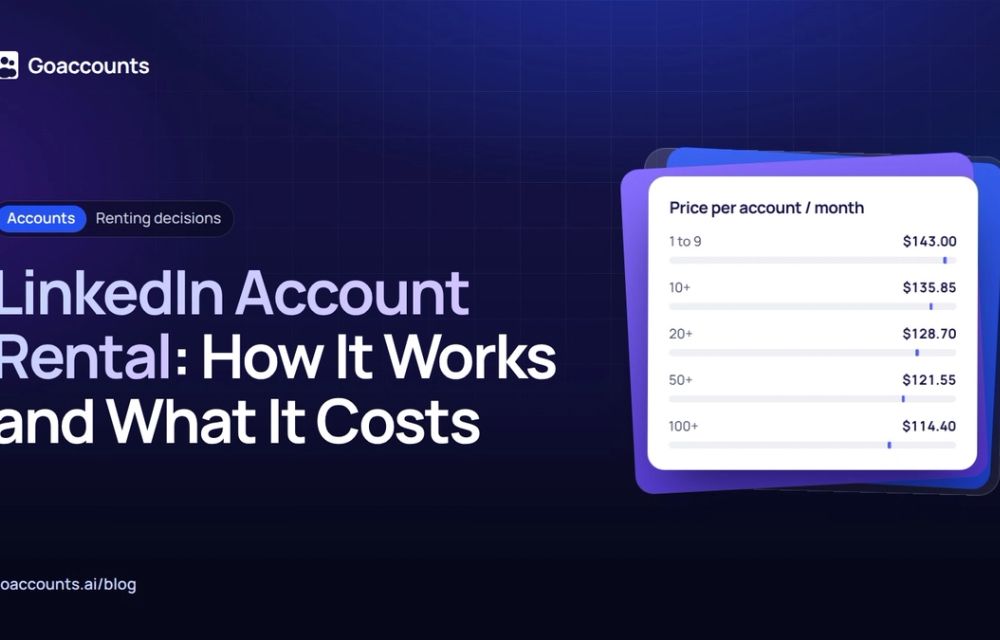
For a team that cannot risk its own profile, another option is to rent real accounts that are already set up that way, instead of building and warming your own. It helps to understand how renting a LinkedIn account works and the difference between real and fabricated accounts before you decide. Each GoAccounts account is a real, ID-verified profile with 500+ organic connections, its own dedicated static ISP proxy, and its own isolated GoLogin browser profile, so one account's activity never bleeds into another's. If an account is restricted, it is recovered or replaced within 7 days, and your next bill is reduced pro-rata for the downtime. Pricing starts at $143 per account per month, month to month, and you can start with one. If you want the full setup walked through, our LinkedIn account course covers it.
If you'd rather not risk your own profile, sign up at GoAccounts and get aged, ID-verified LinkedIn accounts in 3 to 10 days, depending on how many accounts you need.
None of this means LinkedIn permits renting an account. It does not, and its User Agreement bans sharing or transferring an account and using a false identity. Know the terms and decide with your eyes open.
FAQ
Why is LinkedIn asking for my ID? It has flagged your account and wants to confirm you are a real person before it restores normal use, or it is inviting you to earn the optional verified badge. The checkpoint is the common case, and it usually runs through Persona.
Is LinkedIn ID verification safe and legit? Yes. A genuine check runs on LinkedIn through its partners Persona, CLEAR, or DigiLocker. For the voluntary badge, LinkedIn says it does not keep your biometrics or ID photos. Only ever verify on linkedin.com, never through an unexpected email or link.
How long does LinkedIn ID verification take? LinkedIn publishes no figure. An automated-activity restriction re-enables at the time stated on your suspension notice. Be sceptical of any fixed number you see on other sites.
What IDs are accepted? A valid, unexpired government ID card, driver's license, or passport. Library and school ID cards are not accepted, and accepted documents vary by country.
Will I get asked again after I verify? You can, if a tool or a behaviour caused the flag and you do not change it. Verifying confirms your identity; it does not fix the trigger.
Researched and drafted with AI assistance from our team's notes, and checked against LinkedIn's own Help pages on 16 November 2026 by the GoAccounts Team.