40 LinkedIn Connection Message Templates That Get Accepted in 2027
A good LinkedIn connection message fits one real reason to connect into 200 characters, the real limit today, not 300. Here are 40 templates grouped by who's sending, each sized to fit and ready to copy.

Need accounts to run this playbook? Enquire Now
A good LinkedIn connection message fits one specific, relevant reason to connect into 200 characters, the real limit today, not the 300 that many guides still cite, and it skips the pitch. On a free account you can personalize only three requests a month, so make each one count. Below are 40 templates, grouped by who is sending.
Most template lists get two things wrong: they size notes to 300 characters, and they tell you a free account can personalize five requests a month. Both are out of date. This post fixes them, sizes every template to the real 200-character limit, and backs the "keep it short" advice with LinkedIn's own reply data.
How long can a LinkedIn connection message be? (200 characters, not 300)
A connection-request note is capped at 200 characters. That is what LinkedIn's current help page says: each message can be up to 200 characters. Spaces and emojis count toward it. The 300-character figure that half the template lists still repeat came from an older page and no longer applies. Write past 200 and the note either will not send or gets dropped, so your request goes out bare with no message at all.
That cap is the most useful constraint in this whole post. It forces one clear reason to connect and nothing else. Every template below fits inside it.
Can you personalize a connection request for free? (3 a month)
Without Premium, you can add a personalized note to only three connection requests a month. Premium members can send unlimited personalized invitations, though the weekly invitation limit still applies to everyone. This is the fact most lists get wrong, where you will see "five" or "five to ten." It is three.
So a list of 40 personalized templates runs straight into a wall on a free account: you get three personalized sends a month. That is not a reason to write worse notes. Pick the three requests each month that are worth a personal note, send the rest without one, or move to a plan that lifts the cap.
Here are LinkedIn's real limits in one place:
| Limit | What it is |
|---|---|
| Connection-request note | Up to 200 characters, spaces and emojis included |
| Personalized notes on a free account | 3 a month |
| Personalized notes on Premium | Unlimited (the weekly invite limit still applies) |
| Weekly invitation limit | No published number; applies to every member |
Why short notes get accepted (LinkedIn's own data)
LinkedIn's own data shows why short notes win. In its recruiter messaging data, messages under 400 characters got 22% above-average responses, messages over 1,200 characters got 11% below, and individually sent messages did about 15% better than bulk ones. That data runs from May 2021 to April 2022, and LinkedIn only publishes relative figures, not an absolute reply rate, so read it as a direction, not a promise.
A 200-character note is short by design, which is why the limit works in your favor. The rest of what works is simple and matches what every good outreach writer already knows: give one honest, specific reason to connect, show you picked this person on purpose, skip the generic praise like "impressive background" that signals you did no homework, and stop before the pitch.
40 LinkedIn connection message templates by who's sending
Forty notes, grouped by who is sending, each one measured under the 200-character limit. Swap in your own names and specifics, then re-count to stay under 200. Each group opens with one line on why the approach works.
A. Cold B2B sales: reaching a prospect
One specific trigger, one soft line, no pitch. Name the thing you noticed, say what you do in half a sentence, and leave the sale for later.
- "Hi Sarah, saw Acme just opened a London office. I help ops teams cut onboarding time. Happy to share what's worked, no pitch. Worth connecting?"
- "Hi Tom, your post on RevOps hiring hit home. I work with Series A teams on the same problem. Would value staying in touch."
- "Hi Mia, noticed Northwind is scaling SDRs. I share playbooks on ramping reps fast. Keen to connect and swap notes."
- "Hi Raj, we both work in B2B payments. I'm mapping how teams handle chargebacks this year. Would love to compare notes."
- "Hi Lena, your talk on retention was great. I help SaaS teams act on churn signals earlier. Happy to connect."
B. Lead generation and agency owners
Shared world plus light credibility. Show you live in the same market, then prove it with one specific result or focus.
- "Hi Dan, I run outbound for B2B teams in fintech. Saw you're hiring AEs. Thought it worth connecting before I ever reach out properly."
- "Hi Priya, we help agencies book meetings without burning sender reputation. Your growth posts are sharp. Keen to connect."
- "Hi Marco, noticed you scaled Orbit to 20 clients. I build outbound systems for agencies at that stage. Worth a connect?"
- "Hi Jess, same world here, demand-gen for SaaS. I'm collecting what's working in cold outreach this quarter. Happy to share."
- "Hi Omar, your case study on reply rates was useful. I work on the same problem for agency clients. Let's connect."
C. Recruiter to a passive candidate
Praise the specific work, not the person, and make it no-pressure. Passive candidates ignore anything that reads like a pipeline blast.
- "Hi Ava, your work on React design systems stood out. I'm hiring senior frontend roles, remote. No rush, just worth connecting."
- "Hi Ben, saw you lead data eng at Vertex. I partner with teams hiring in that space. Open to connecting for future roles?"
- "Hi Chloe, impressed by your open-source Go work. I recruit backend engineers for scale-ups. Happy to stay in touch."
- "Hi Noah, you've grown fast in product design. I help teams hiring senior PDs. No pitch, just keen to connect."
- "Hi Zoe, your ML papers are strong. I'm building a shortlist for a staff ML role. Worth connecting even if the timing's off?"
D. Job seeker to a recruiter or hiring manager
Lead with genuine interest and say who you are in a few words. You are asking for their attention, so give them a reason that is about them.
- "Hi Sam, I'm a frontend engineer following Lattice's work closely. Saw your team is growing. Would value connecting."
- "Hi Dana, you lead design at Figma. I'm a product designer with 6 years in SaaS. Keen to connect and learn from your team."
- "Hi Eli, I saw your post on hiring SDRs. I'm moving into sales from support and would love to connect."
- "Hi Grace, I admire how you built the growth team at Loom. I'm exploring similar roles. Happy to connect."
- "Hi Leo, I'm a data analyst keen on climate tech. Your work at Watershed is why I reached out. Would love to connect."
E. Founder and peer networking
Trade on the shared stage. Founders connect with founders to swap notes, so offer that, not a sell.
- "Hi Ana, fellow seed-stage founder in devtools here. Always trading notes with people in the trenches. Keen to connect."
- "Hi Will, we're both building in B2B AI. I liked your take on usage-based pricing. Worth connecting to compare paths?"
- "Hi Nina, saw Harbor just raised, congrats. I'm a few months behind you in the same market. Would value staying in touch."
- "Hi Kofi, your thread on hiring your first AE was gold. First-time founder here too. Let's connect."
- "Hi Ruth, we both went through the same accelerator. Keen to connect with other founders from the cohort."
F. After a shared event or webinar
The strongest trigger there is. Name the event and the moment while it is fresh.
- "Hi Max, we were both at SaaStock yesterday. Your question on retention stuck with me. Keen to continue it here."
- "Hi Tara, enjoyed your webinar on cold email today. I had a follow-up on list quality. Would love to connect."
- "Hi Ian, we spoke briefly at the RevOps meetup about routing. Connecting so we stay in touch."
- "Hi Sofia, missed catching you after your panel at Inbound. Loved the point on intent data. Keen to connect."
- "Hi Jack, both in the outbound workshop this morning. Your pod structure idea was smart. Let's connect."
G. A mutual connection or referral
Name the person you share. A warm name does more than any clever line.
- "Hi Rena, Priya Shah suggested I reach out, we both worked with her at Orbit. Would love to connect."
- "Hi Tim, we're both close with Marco at Northwind. He speaks highly of your work. Keen to connect."
- "Hi Bea, saw we share 12 connections in the RevOps world, including Dan Lee. Worth connecting."
- "Hi Hugo, Jess from Lattice mentioned you lead a sharp growth team. Would value connecting."
- "Hi Mara, we both know Omar from the agency scene. I build outbound systems too. Let's connect."
H. Their content, group or alumni network
React to something real they made or share. Specifics prove you were actually there.
- "Hi Paul, your post on async standups changed how my team runs them. Thanks for that. Keen to connect."
- "Hi Lily, we're both in the B2B Growth community. Your comment on attribution was spot on. Let's connect."
- "Hi Dev, fellow Sheffield alum here. Saw you're leading data at Monzo now. Would love to connect."
- "Hi Faye, I've followed your newsletter for months. The piece on ICP drift was great. Keen to connect."
- "Hi Cole, we both commented on Nina's post about pricing. Your angle was sharp. Worth connecting."
What to send after they accept
The note only earns the accept. The first message after they connect does the real work. Keep it under 400 characters, lead with why you are relevant to them, make one specific low-pressure ask with an easy out, and wait a day or two after they accept before you send it.
On a free account you can message your first-degree connections at no cost, so connecting first and then messaging is the no-cost route. InMail, which reaches people you are not connected to, is the paid fallback: it costs a credit, the subject can run to 200 characters and the body to 2,000, though the same "keep it short" rule applies.
Three short examples, one per common case. Swap in the real detail:
- Sales: "Thanks for connecting, Sarah. Saw Acme is opening in London. We cut onboarding time for ops teams setting up new offices. Worth a quick look at what worked for a similar team? No worries if the timing is off."
- Recruiter: "Thanks for accepting, Ava. No pitch here, just context: I'm hiring senior frontend roles, fully remote, and your design-system work fits. Happy to share the detail if you're ever curious, or point you to it later."
- Job seeker: "Thanks for connecting, Dana. I'm a product designer with six years in SaaS and I follow your team's work closely. If you ever have five minutes, I'd value one bit of advice on breaking into a team like yours."
These are examples, not promises. Reply rates swing hard by audience and timing.
Why aren't my connection requests getting accepted?
Mostly because of the numbers, not the wording. Set honest expectations first. Across large outreach datasets, acceptance commonly lands somewhere between about 18% and 29%, and only around 3% of people reply to the note itself. Those figures come from outreach vendors measuring their own sends, they vary a lot, and none is a rate LinkedIn promises or that you should expect. Personalizing and sizing the note correctly is the lever you control. The acceptance rate is not.
Then there is the real ceiling. A free account personalizes three requests a month. No plan lifts the weekly invitation limit, which applies to everyone and which LinkedIn does not publish. In practice one profile tops out around 100 to 150 requests a week before you risk a restriction, which usually lasts about a week. Push past it and LinkedIn can throttle your sending, without telling you the number or shortening the block.
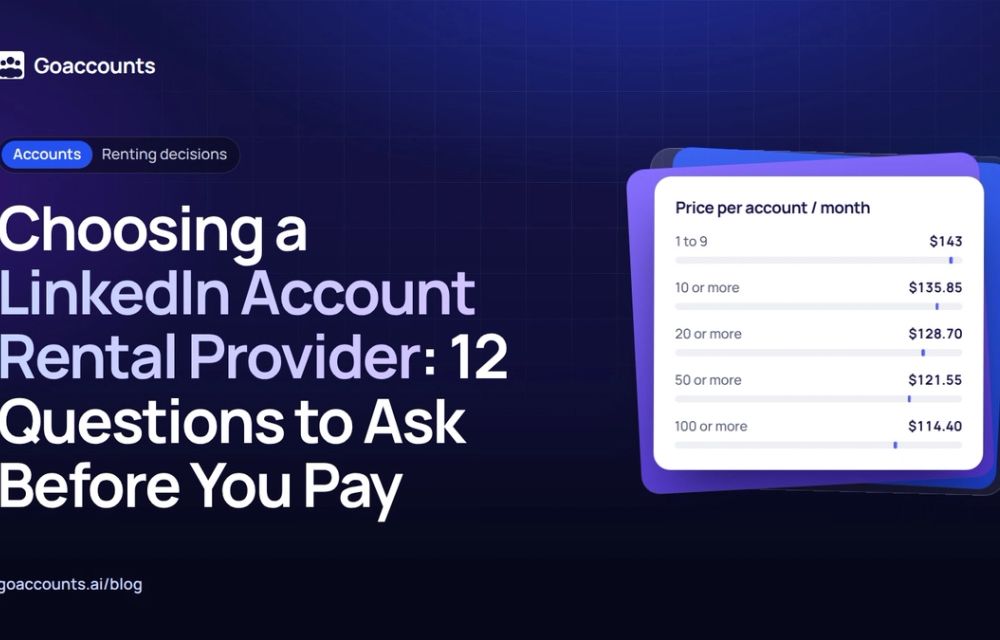
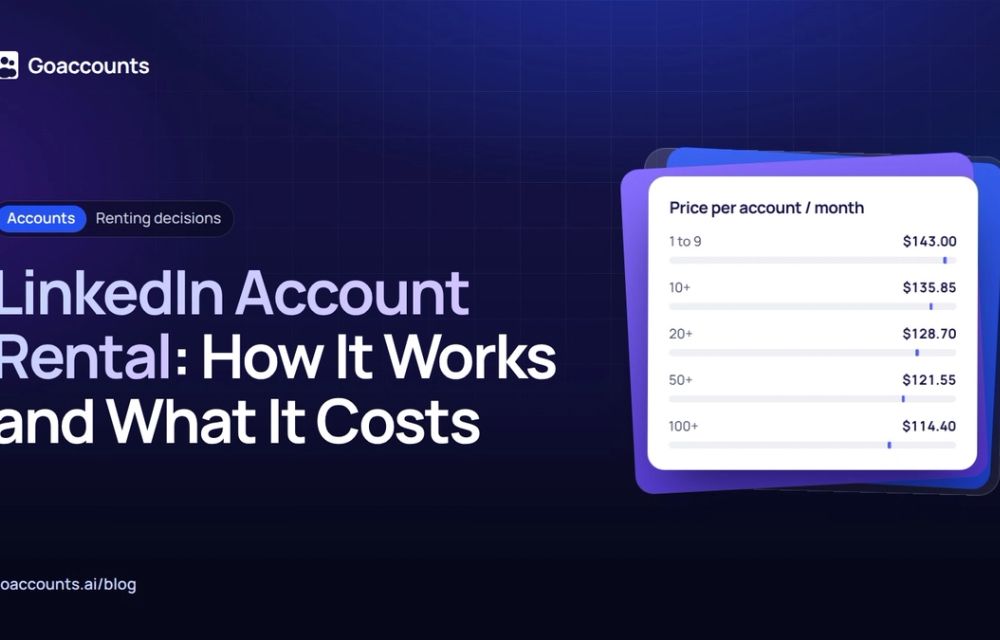
So if your problem is a weak line, rewrite the note. If your problem is that one profile cannot send enough personalized requests to matter, that is a seats question, not a wording one. When one profile's weekly limit is the bottleneck, a cleverer line will not move it. More accounts will. GoAccounts rents aged, ID-verified LinkedIn accounts from $143 a month, each with its own dedicated proxy and GoLogin browser profile, month to month. If you want the full workflow for running more than one, our guide on scaling outreach across more than one account and the GoAccounts academy walk through it, and if an account ever gets limited, here is what happens if you hit the invite limit.
FAQ
What is the LinkedIn connection request character limit? 200 characters, including spaces and emojis. The 300-character figure some guides still show is out of date.
Can you personalize a connection request for free? Yes, but only three a month. Premium removes that cap, though the weekly invitation limit still applies to every account.
Should you add a note or send the request blank? A specific, relevant note helps. Since a free account only gets three personalized notes a month, spend them on the people who matter most and send the rest without one.
Why do connection requests get ignored? Usually generic praise, an early pitch, or sending so many that you hit the weekly limit. A specific reason to connect and a note under 200 characters fix the first two.
How many connection requests a week is safe? LinkedIn publishes no number. In practice a single profile tops out around 100 to 150 a week before it risks a restriction. Running outbound at volume means more accounts, not more requests from one. For which account type to use, see real vs fabricated accounts.
Researched and drafted with AI assistance from our team's notes, and checked against LinkedIn's own help pages and published reply data on November 16, 2026 by the GoAccounts Team.