What Is LinkedIn Open Profile? Who You Can Message for Free
LinkedIn Open Profile lets a Premium member be messaged for free, with no InMail credit. Here is who has it, who can message them, and the send limit LinkedIn never publishes.

Need accounts to run this playbook? Enquire Now
LinkedIn Open Profile is a setting a Premium member can switch on so any other member can message them for free, without connecting first and without spending an InMail credit. You do not need Premium to send that message. LinkedIn does cap how many Open Profile messages you can send, but it does not publish the number. Rules checked November 2026.
What is a LinkedIn Open Profile?
Open Profile is a feature on the recipient's side, not a plan you buy to reach other people. In LinkedIn's own words, "The Open Profile Premium feature allows members to contact a Premium member for free." The settings page says the same thing from the inbox owner's view: the "Open Profile feature allows other LinkedIn members to message you for free, without using InMail messages."
So when a Premium member turns Open Profile on, anyone on LinkedIn can message them directly, even without a connection, and it costs the sender nothing. LinkedIn describes it as a toggle a Premium subscriber manages: switch it on to "allow anyone on LinkedIn to contact you directly for free, even if they aren't connected with you," or switch the toggle off to disable it.
Most pages that explain Open Profile describe it as a way to reach more leads. That is the sender's view. Open Profile is something the person you want to reach has turned on about their own inbox. You cannot buy it to message other people.
Who has Open Profile, and who can message them?
Only Premium members can have Open Profile on. LinkedIn calls it a Premium feature, and the toggle lives in a Premium subscriber's settings. "Premium" covers the paid LinkedIn plans: Premium Career, Premium Business, Sales Navigator Core and Advanced, Recruiter Lite and Recruiter. A member on any of those plans can turn Open Profile on.
Free and Basic members cannot have Open Profile as a recipient, because it is a Premium feature. They can still be messaged by their existing connections for free, the same as any member.
On the other side, almost anyone can message an open profile. A free account can send one, the same as a Premium account. That is the point of the feature for the recipient: it widens who can reach them.
One thing LinkedIn does not state on these pages is whether Open Profile is on or off by default for a new Premium subscriber. The pages only describe the toggle, so treat it as a setting the member controls, and do not assume a default either way.
Is it free? Does it use an InMail credit?
Yes, it is free, and no, it does not use an InMail credit. That is the whole reason the feature matters for outreach. A normal InMail to someone you are not connected with costs one credit from your monthly allotment. An Open Profile message is the exception: LinkedIn says you contact the member "for free," and the settings page spells out "without using InMail messages."
Open Profile is the one route to message a non-connection without spending a credit and without sending a connection request first. If you run outreach and watch your InMail credits drain, a lead with Open Profile on is a free message you would otherwise have paid for.
There is a related note for anyone hiring. On LinkedIn Recruiter and Recruiter Lite, Open Profile InMails do not count toward your credits either. It is the same idea from the recruiter seat: reaching an open profile does not cost you.
Do you need Premium to message an Open Profile?
No. You do not need Premium to send an Open Profile message. LinkedIn's settings page says that "members with basic or free accounts can only send a limited number of open profile messages each month," which means a free account can send some. The feature is built so that anyone can reach the Premium member who turned it on.
The catch is volume. A free or Basic account runs into a monthly cap on how many Open Profile messages it can send. For a handful of messages that does not matter. If you are trying to reach people at scale from one free account, you will feel the limit. So the honest answer sits between the two claims you see around the web: you do not have to pay to message an open profile, and a free account does not get to send them without limit.
Is there a limit on Open Profile messages?
Yes, there is a limit, and this is where most pages get it wrong. LinkedIn states plainly that "we limit the number of Open Profile messages you can send in a given time period." It adds that "members with basic or free accounts can only send a limited number of open profile messages each month." Both lines confirm a cap exists.
What LinkedIn does not do is publish the number. Neither the send page nor the settings page gives a figure. We read both of LinkedIn's own Open Profile pages on 2026-11-16, and neither states a monthly or per-period number for Open Profile sends. A figure of around 800 a month circulates on outreach blogs. That number is not on LinkedIn's pages, so we will not repeat it as fact. The accurate line is that LinkedIn caps Open Profile sends and does not publish the number, and the cap is tighter for free and Basic accounts.
If you are planning outreach around Open Profile, assume the cap is real and ignore any specific number someone else guessed.
How to send an Open Profile message (and turn it on)
To send one, LinkedIn gives these steps. Go to the profile of the Premium member you want to message. On desktop, "click the Message button in their introduction section." On mobile, the same step reads "tap the InMail button." The button is labelled differently across desktop and mobile, so do not read too much into the label itself.
One practical note from LinkedIn: "if you have a Premium subscription but your credit card on file is expired, you'll first need to update your payment information before you can send an Open Profile message." Worth checking if the send option is not behaving.
To turn Open Profile on for your own inbox, you need a Premium subscription. In your settings, a Premium subscriber can toggle Open Profile on to let anyone contact them for free, or toggle it off to disable it.
A quick word on telling whether a profile is open. Vendor tools sell detection features, and some say a visible Message button means the profile is open. LinkedIn's own page does not say that, and it names a different button on desktop and mobile, so treat any visual tell as a soft signal, not a rule. The reliable test is simply whether you can message the person without a connection or a credit.
Open Profile vs Open to Work: not the same thing
These two get mixed up constantly, partly because glossaries list them side by side, and partly because both use the word "open." They are unrelated features.
Open Profile is a Premium messaging setting. It changes how people can reach you: others can message you for free, with no InMail credit, connected or not.
Open to Work is a free job-seeking signal. Any member can switch it on to tell recruiters, or everyone, that they are open to new roles. It is not a messaging feature, and it does not require Premium.
Open Profile changes how people can message you. Open to Work changes what your profile signals.
When free reach is the real limit: it's a seats question
Open Profile is a genuine free way in, but it is not an outreach channel you can scale on its own. It only works when the other person has turned it on, and LinkedIn caps how many Open Profile messages you can send. Lean on it for volume and you hit two ceilings at once: the recipient's choice, and your own send limit.
When free reach runs out, the bottleneck is usually how many people a single account can reach, not the plan it is on. A pricier plan adds credits, but it is still one account with one network and one set of caps. The way teams running real volume get around that is more seats. Each account is its own LinkedIn presence, with its own connections you can message for free and its own allotment if you add a Premium feature.
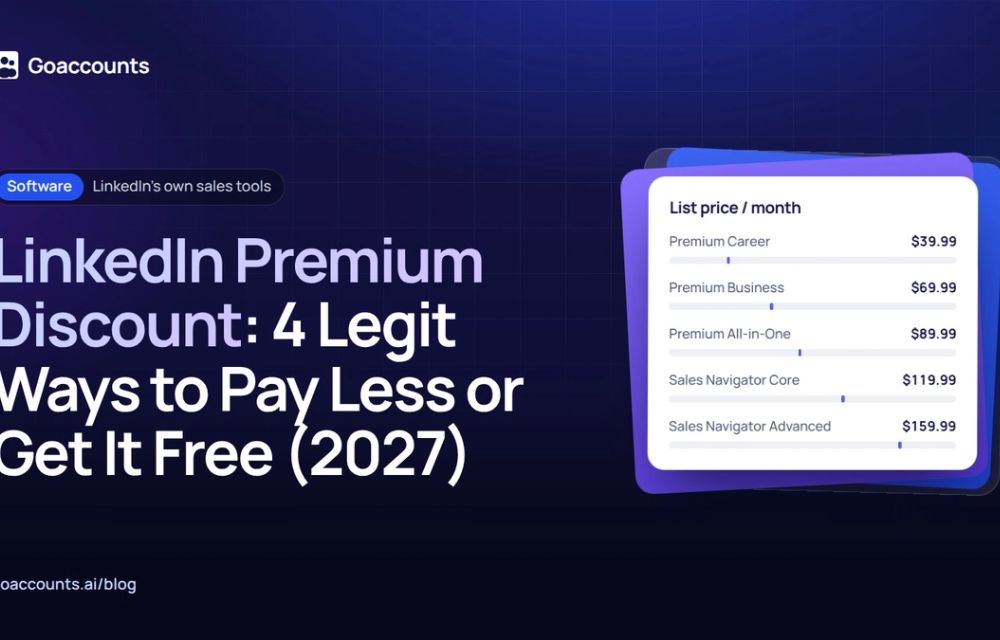
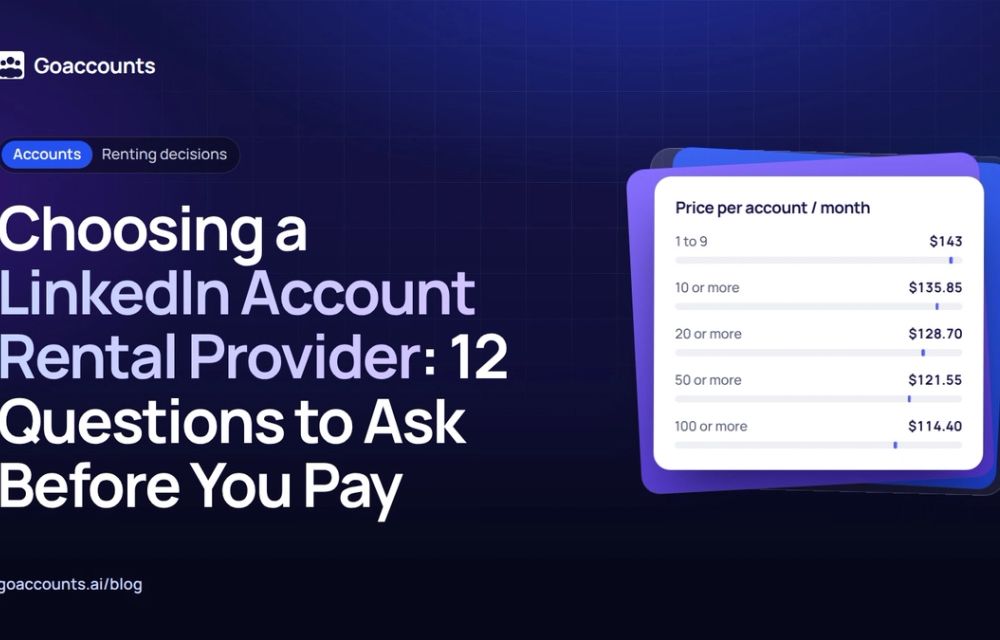
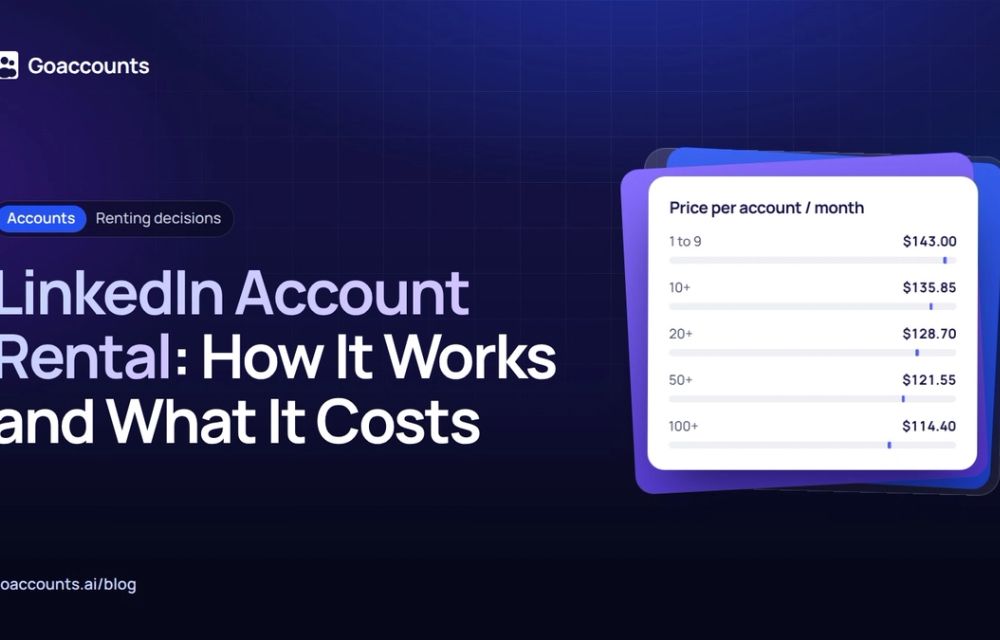
That is where renting accounts fits. GoAccounts rents LinkedIn accounts from $143 a month, each with 500+ real connections you can message for free, its own dedicated proxy and browser profile, and optional add-ons such as Sales Navigator Advanced for $40 a month (LinkedIn's list price is $159.99) that bring their own InMail credits per account. If your limit is reach rather than a feature, more accounts solve it in a way a bigger single plan cannot. For more on the mechanics, see real vs fabricated accounts and what to do if an account is restricted. Our academy course walks through the setup.
FAQ
What is a LinkedIn Open Profile? It is a setting a Premium member can switch on so any other member can message them for free, without a connection and without an InMail credit. LinkedIn calls it a Premium feature that lets others "contact a Premium member for free."
Can you message an Open Profile for free? Yes. LinkedIn says you reach the member "for free, without using InMail messages." It uses no InMail credit.
Do you need Premium to message an Open Profile? No. Free and Basic accounts can send Open Profile messages, but LinkedIn caps how many they can send each month.
Is there a limit on Open Profile messages? Yes. LinkedIn says it limits sends "in a given time period" and caps free and Basic accounts monthly, but it does not publish the number. Ignore the "800 a month" figure you may see quoted, it is not LinkedIn's.
How can you tell if someone has Open Profile on? The reliable test is whether you can message them without connecting and without spending a credit. A visible Message button is a soft hint at best, since LinkedIn names the button differently on desktop and mobile.
Is Open Profile the same as Open to Work? No. Open Profile is a Premium messaging setting that lets people message you for free. Open to Work is a free job-seeking signal that any member can turn on. They share the word "open" and nothing else.
Researched and drafted with AI assistance from our team's notes, and checked against LinkedIn's Open Profile help and settings pages on 2026-11-16 by the GoAccounts Team.